
Foundation Work in Lincoln, MA
Water coming through a basement wall after a heavy rain. A damp corner that never quite dries out, even in August. A section of fieldstone wall that bows, crumbles, or has a crack running wider every year. If that is what brought you here, you are not looking for a driveway or a patio. You are looking for someone to deal with what is happening at the base of the house, and that is a different job with a different crew.
Lincoln has a lot of older houses sitting on original fieldstone or rubble foundations, often with no membrane and no working perimeter drain. Water finds its way through the stone and mortar joints themselves, not under the footing. That distinction matters because it decides where the fix has to happen, and it is rarely where people expect.
Why the inside doesn’t fix it
Painting the inside of a damp foundation wall, or sealing it with an interior coating, stops water appearing on the surface you can see. It does not stop water moving through the wall. The moisture keeps traveling, pushing against the coating, and it tends to show up somewhere else: a new crack, a floor joint, the base of a different wall. The coating treats a symptom. The cause is outside, where water is reaching the wall in the first place because the ground around it is not shedding or draining the way it should.
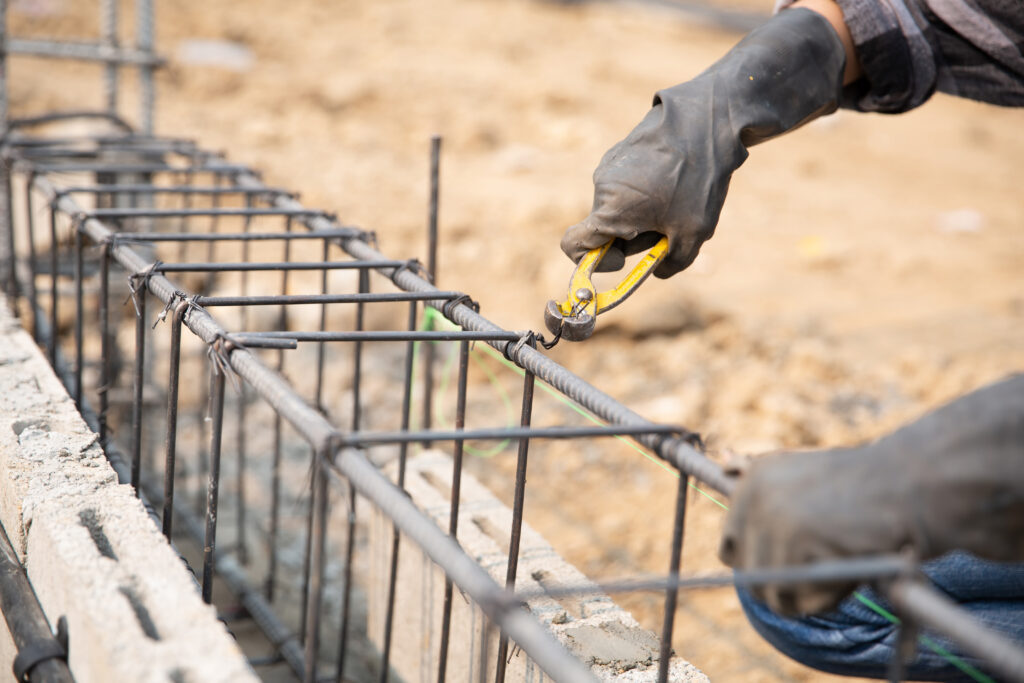
An exterior approach means excavating down along the affected section of wall, dealing with the wall itself, putting in drainage that actually moves water away, and backfilling properly. It is more disruptive than an interior fix and it costs more up front, because it is real excavation next to a structure, not a weekend of painting. The honest reason to do it is that it addresses where the water is getting in, rather than managing where it shows up.
What that work actually involves, once we are down at the wall:
- Clearing soil away from the footing to expose the problem joints or cracks, usually in sections rather than the whole perimeter at once
- Repointing or parging the stone and mortar where it has failed, so the wall itself is sound again
- Installing or repairing a drain line at the footing so water moving through the soil has somewhere to go besides the wall
- Grading the backfill so surface water sheds away from the house instead of pooling against it


What Our Clients Say
What's actually happening to the wall
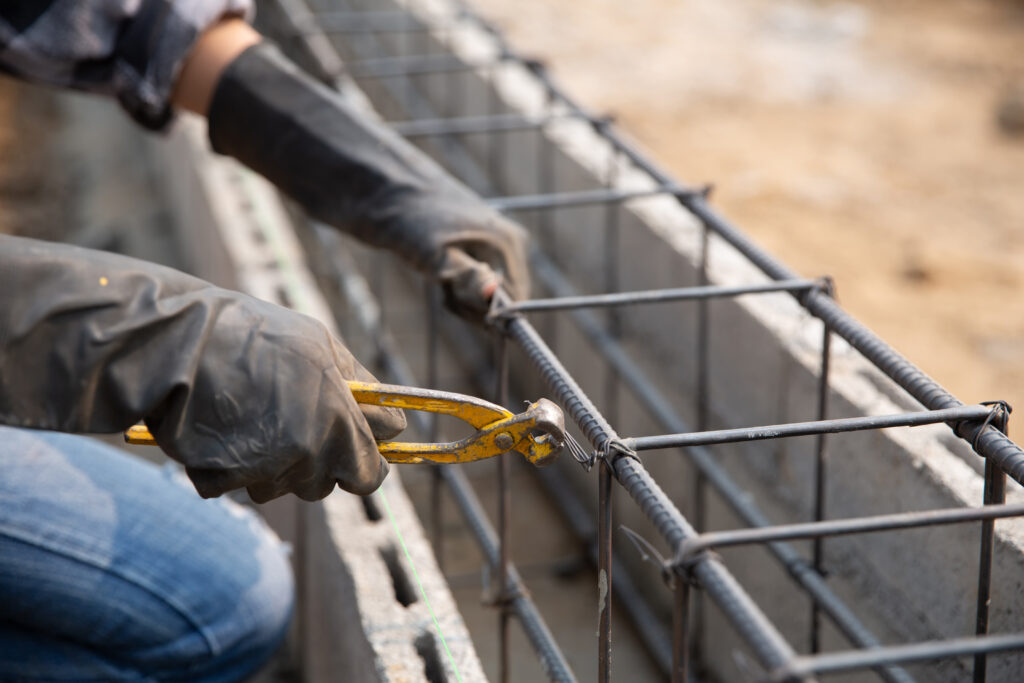
Fieldstone and rubble foundations common in Lincoln’s older neighborhoods were never built with a membrane behind them. The stone itself is porous, and the mortar between the stones is older and weaker than anything used today. Groundwater and surface runoff sitting against that wall will eventually find a path through it, following the mortar joints or a weak stone rather than being stopped outright.
Over decades, that movement of water also washes fine material out from between the stones, which is part of why older walls bow or settle unevenly rather than failing all at once. A wet corner every spring is usually the same mechanism working slowly: snowmelt and rain collecting against one section of foundation, year after year, with nowhere else to go.
Lincoln’s freeze-thaw cycles make this worse. Water that gets into a mortar joint in November and freezes in December expands, widening the gap just enough for more water to enter the next time. Repeat that process over a few winters and a hairline crack becomes a running leak:
The work, in sequence
Once we know which section of wall is affected and how a machine can reach it, the sequence is fairly consistent. Excavate down along the wall to below the problem area, clear and inspect the wall itself, address what the excavation reveals, install drainage at the base, backfill in stages, and restore the ground on top.
Anything in the way, planting beds, a section of path, a fence line, gets noted before digging starts so it can go back as close to original as the site allows. On older Lincoln properties that often means mature shrubs or stone edging that took years to establish, so we plan the dig to disturb as little of it as possible.
The work, in order
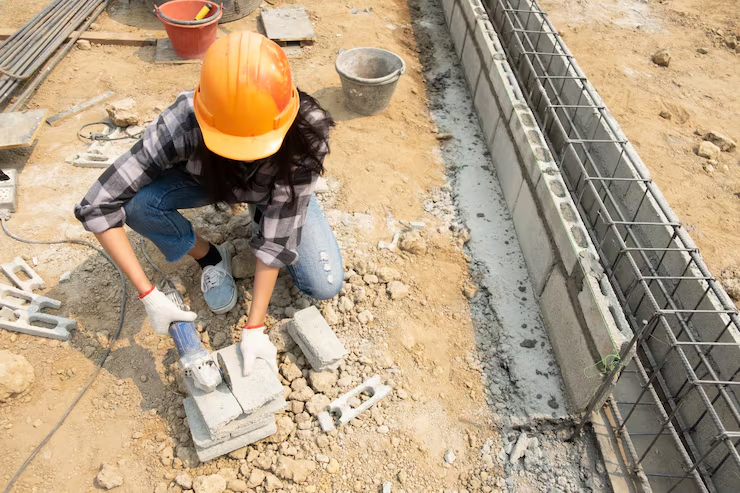
Access and excavation
A machine needs a clear run to the wall and room to turn with the spoil.
Protecting what's around it
Mature trees, stone walls and planting beds near the foundation get flagged early. Root zones, established landscaping and nearby Lincoln drainage runs all shape how close and how deep we can safely dig without causing damage.
Wall treatment
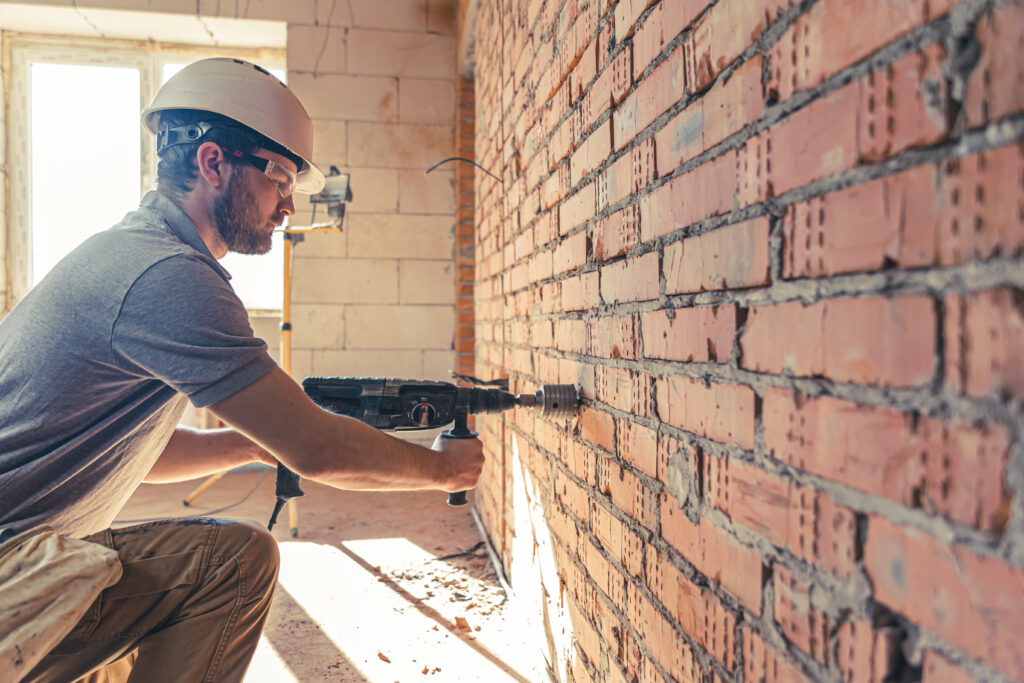
Once exposed, the wall gets assessed stone by stone. Loose mortar, washed-out joints and bowed sections are addressed before anything goes back against the wall.
Drainage and backfill
A drain line at the base of the wall gives water somewhere to go besides through the stone, important given Lincoln's heavy clay soils.
Reinstating the ground
Across Lincoln properties, the final grade always slopes away from the house, never toward it. Paths, beds, lawns and driveways disturbed during excavation are carefully reinstated only once drainage has been checked and confirmed to be working properly.
Grade, drives, and what comes up along the way
On the kind of long private drive typical of a Lincoln property, regrading around a foundation often reaches the drive itself, particularly if it runs close to the house or slopes toward it. If the final grade has to change near the foundation, a section of drive, walk, or paved apron close by may need to come up and go back to match the new slope.
That is coordination between the foundation work and the surface above it, not two separate jobs bolted together. We’ll tell you up front if the regrading is likely to reach the driveway or walkway, and what that means for the surface once the drainage work is finished and the ground has settled.
Lincoln’s conservation land and wooded lots also mean the finished grading has to blend back into the surrounding ground rather than standing out as an obvious disturbed patch, which is part of why we restore in the original materials wherever the site allows.

Before anyone comes out
A few things are worth doing on your own first. Note when the water shows up, after rain, after snowmelt, or more or less constantly, and which wall or corner it affects. Take photos of any cracks, bowing, or damp staining, and if you can, a photo from the same spot every few weeks so there’s a record of whether it’s getting worse. Check gutters and downspouts near the affected area; a downspout dumping water right at the foundation is sometimes part of the problem and costs nothing to redirect.
That information helps us assess the site faster and plan where excavation needs to happen. If you’re dealing with water in the basement, a bowing wall, or a wet corner that won’t clear in Lincoln, call Driveway Specialists at (413) 337-3772 and we’ll walk through what you’re seeing and what access to your property looks like before anyone sets foot on site.
What to check and write down first
These are the pointers that help most before anyone visits.
- Note where and when. Which wall, which corner, and whether it follows heavy rain, snowmelt or a particular season.
- Photograph it dry and wet. Take pictures of the same spot on a dry day and again after rain.
- Look at the outside. Check whether the ground beside that wall slopes toward the house, whether a downspout empties near it, and whether anything piles water against it.
- Check for movement. Look for horizontal cracks, a wall that leans in, or stones that have shifted. Mark the ends of a crack with a pencil and date it, so changes can be seen.
- Check the stonework. Press on the mortar. If it crumbles or sands away, say so.
- Think about access. Where could a machine stand, and what is in its way? Tell us who shares the drive or boundary.
- Leave it as you found it. Do not seal or patch the wall before we see it. It hides what we need to look at.
Questions we get asked
Is this the same crew that does driveways and patios?
No. Foundation work is excavation and drainage around the structure of the house, a different scope from paving. We treat it separately because the planning, equipment, and sequencing are different from surface work.
Can you reach the foundation on a wooded Lincoln lot?
Usually, but access has to be planned first. Long driveways through trees, conservation land setbacks, and mature landscaping all affect where a machine can work, so we look at the route before quoting the excavation.
Will this definitely stop water in my basement?
We can tell you what we find once the wall is exposed and what the drainage work addresses. We won't promise a dry basement outright, because every wall and site is different until it's opened up.
Does this affect my driveway or walkway?
Sometimes. If the regrading needed to fix drainage reaches a section of drive or path near the house, that section may need to come up and be reinstated once the grading is finished.
What should I check before calling?
Note when and where the water or damp appears, photograph any cracking or bowing, and check whether a downspout is discharging near the affected wall. That information speeds up the first assessment.
Next step
Call us on (413) 337-3772. Tell us which wall, what you have seen, and how the lot slopes around it. We have worked across Middlesex County since 1988, and we will tell you plainly what is likely going on and whether outside work is the right answer.