
Foundation Work in Littleton, MA
Water coming through a basement wall after heavy rain. A damp patch that never quite dries out, even in a dry summer. A corner of the foundation that looks like it is bowing inward, or mortar that crumbles when you touch it. These are not cosmetic problems and they are not driveway problems. They are foundation problems, and in a lot of the older houses around Littleton, they come from the same root cause: a foundation that was never built to keep water out in the first place.
Many homes in this part of Middlesex County sit on fieldstone or rubble foundations, sometimes with a parged coating added later, but with no real membrane and no working perimeter drain. Those foundations weren’t designed to resist water pressure from the outside. They were built to hold the house up, on the assumption that water would find its own way through or around the stone. For decades that was fine. Then grading settles, gutters clog, a downspout starts dumping water right against the wall, and the house starts telling you about it.
Why water moves through the wall, not under it. With a rubble or fieldstone wall, water doesn’t need a crack to get in. It moves through the joints between stones, through old mortar that has lost its bond, and through the porous stone itself. Hydrostatic pressure from saturated soil outside pushes it along. That’s a different failure mode from a poured concrete foundation with a single crack, and it means the fix has to address the whole wall and the ground around it, not one spot. Patching the inside face with hydraulic cement might buy a season, but it doesn’t change the pressure building up outside, so the water usually just finds the next weak joint.
On Littleton’s rural and semi-rural lots, the ground itself often works in your favor. Sandy soil drains faster than the clay-heavy ground closer to Boston, so water usually isn’t sitting against the foundation for weeks at a time. But sandy soil also settles and shifts over the years, and long driveways and gravel aprons graded without much thought for runoff can end up funneling water straight at the house instead of away from it. We see that pattern a lot on the gravel-to-asphalt conversion jobs we do out this way: nobody designed the original grading, it just happened, and the house has been fighting it ever since.
A proper fix usually means excavating down to the footing on the affected side, parging and sealing the wall, installing or replacing a perimeter drain, and bedding it in clean stone so water has somewhere to go besides the basement. Where a corner has started to bow or lean, that’s a structural issue on top of the moisture one, and it needs reinforcement, not just waterproofing.


What Our Clients Say
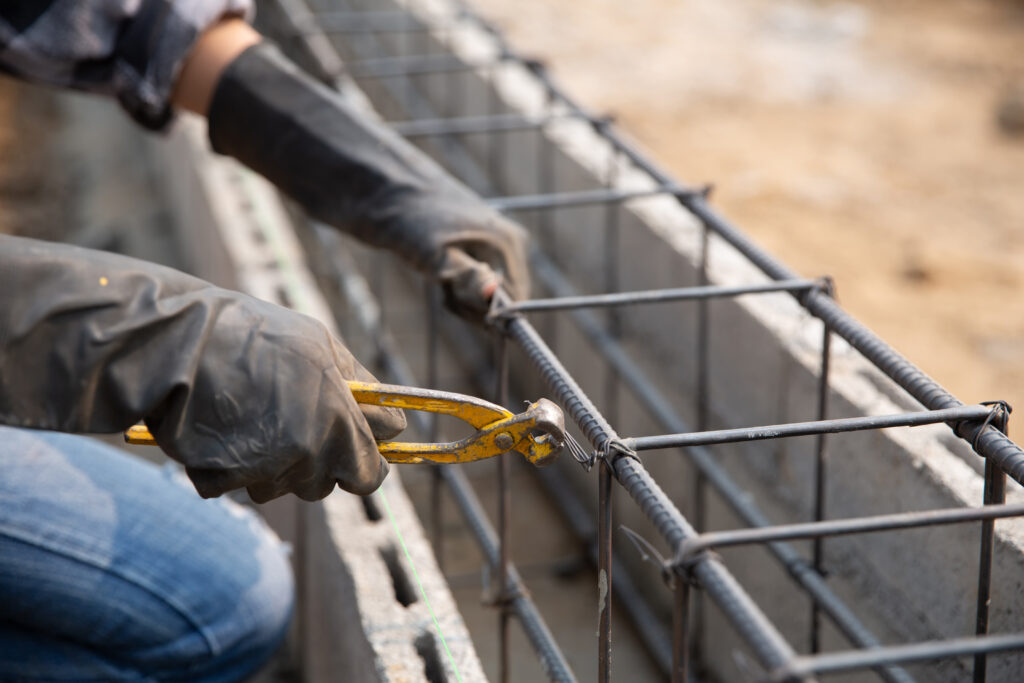
Interior fixes treat the symptom, not the cause
A lot of Littleton homeowners start with an interior approach: a sealant on the basement wall, an interior drain and sump pump, a dehumidifier running constantly. These can manage water once it’s already inside, and sometimes that’s the right short-term call, especially if a sale or a tight budget is forcing a quick decision. But they don’t stop water from moving through the wall. The wall keeps absorbing moisture, mortar keeps breaking down, and the structural problem keeps getting worse even while the basement looks drier.
What the excavation actually involves
Once we’ve identified the affected section of foundation, the work starts with excavation down to the footing along that stretch of wall. On Littleton properties this usually means digging a trench a few feet wide and deep enough to expose the full height of the wall below grade, since most homes here sit on foundations poured well below the frost line. Anything planted close to the house along that run, shrubs, foundation beds, sometimes a small tree, generally has to come out or be relocated before the machine starts, and we’ll flag anything worth saving ahead of time.
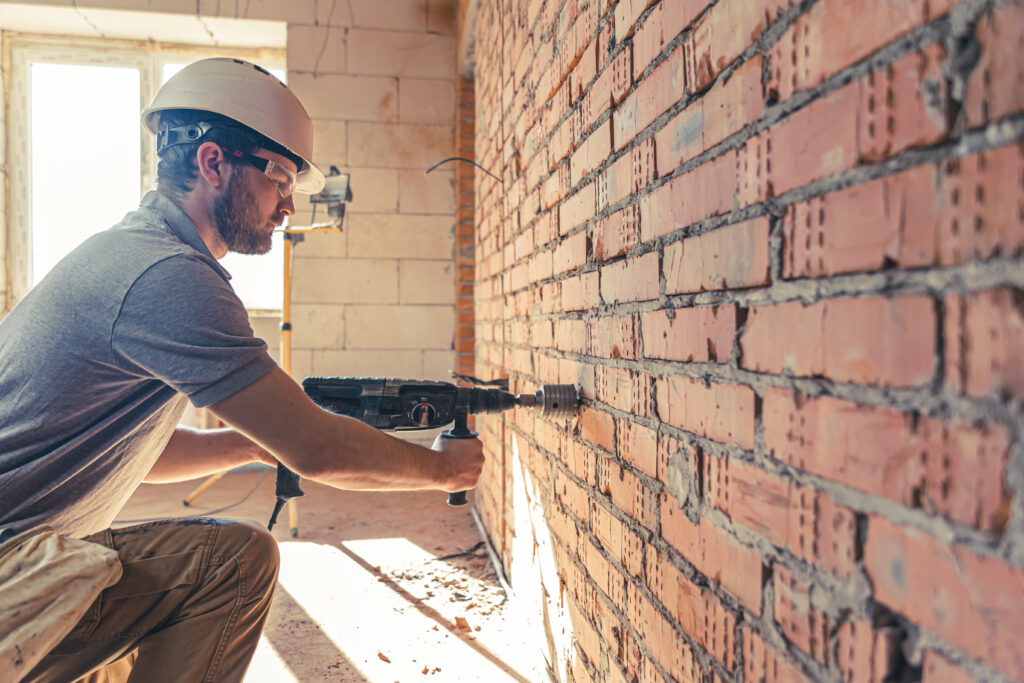
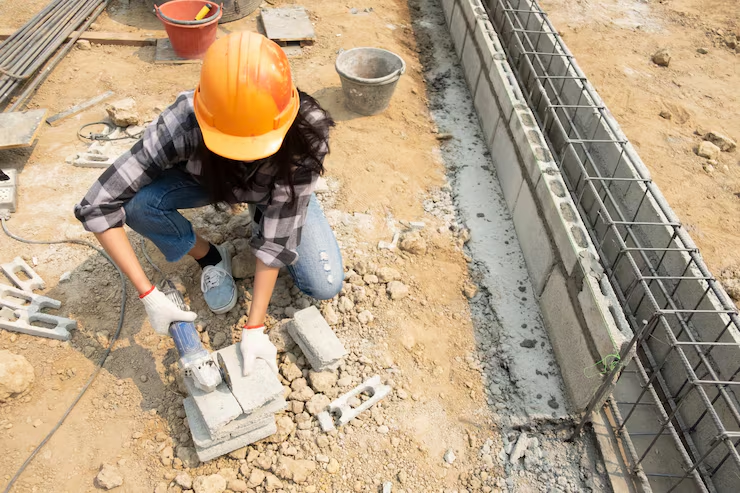
The work, in order
Treating and sealing the wall
With the wall exposed, failing mortar gets repointed and the exterior face is treated and coated against moisture. Fieldstone walls need more care than poured concrete, since irregular surfaces and joints require individual attention rather than one even coat.
Drainage and backfill
A perimeter drain runs along the footing to daylight or a dry well, based on the lot’s natural fall. Backfill is compacted and sloped carefully, since loose fill settles unevenly and brings the problem back.
What Littleton lots do well
Sandy soil drains better than clay once a proper drain is in place. On many Littleton properties that means the new perimeter system has less standing water to move than it would closer to Boston.
Where access gets tight
Long rural driveways around Littleton properties help a machine reach most sides of a house. But outbuildings, mature trees, wells and septic fields close to the foundation can still block one wall entirely, forcing careful hand digging in that spot.
Reinstating the ground
Once drainage is backfilled and compacted in layers, topsoil and grass go back over the trench, graded to pitch away from the house rather than flat or toward it, matching the natural slope found across most Littleton properties.
Access decides the approach
On the kind of lots common around Littleton, long gravel drives and open rural setbacks usually mean an excavator can reach most sides of the house without much trouble. That’s a real advantage over a tight urban lot. But it isn’t automatic. A mature tree line close to the foundation, a septic field in the wrong spot, a well head, or an outbuilding crowding the affected wall can block machine access entirely and push the job toward hand excavation, which takes longer and costs more for the same linear footage of wall.

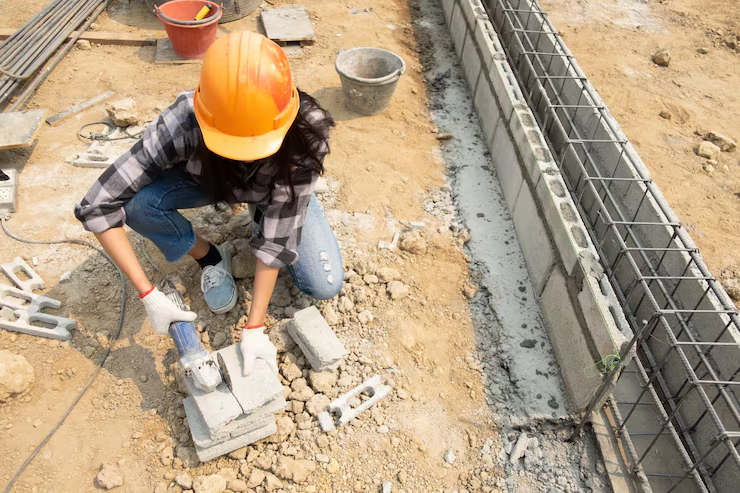
Regrading and what happens at the surface afterward
Once the wall and drainage are done, the ground above has to be regraded so water sheds away from the house instead of pooling back against the new work. On a lot where the final grade affects a driveway, apron or walkway, that surface sometimes has to come up before excavation starts and gets reinstated afterward, matching the new grade rather than the old one. This is a point where foundation work and driveway work intersect, but they’re still two different trades done in sequence, not one job.
If the drive or a section of walk has to be disturbed, we treat that as a separate piece of work once the foundation side is finished and the ground has had time to settle properly.
What to check and write down first
These are the pointers that help most before anyone visits.
- Note where and when. Which wall, which corner, and whether it follows heavy rain, snowmelt or a particular season.
- Photograph it dry and wet. Take pictures of the same spot on a dry day and again after rain.
- Look at the outside. Check whether the ground beside that wall slopes toward the house, whether a downspout empties near it, and whether anything piles water against it.
- Check for movement. Look for horizontal cracks, a wall that leans in, or stones that have shifted. Mark the ends of a crack with a pencil and date it, so changes can be seen.
- Check the stonework. Press on the mortar. If it crumbles or sands away, say so.
- Think about access. Where could a machine stand, and what is in its way? Tell us who shares the drive or boundary.
- Leave it as you found it. Do not seal or patch the wall before we see it. It hides what we need to look at.
Questions we get asked
How do I know if this is a foundation problem or just a drainage problem?
If water is actually coming through the wall, staining it, or you can see cracking or crumbling mortar, that's a foundation issue even if poor drainage outside is making it worse. We look at both the wall condition and the grading around it before deciding what work is needed.
Will interior sealing fix this without digging up the yard?
Interior sealants and drains can manage water once it's inside, but they don't stop water moving through a fieldstone or rubble wall from the outside. For a wall that's actively failing or letting water through, exterior excavation addresses the cause rather than managing the symptom.
Does my driveway need to come up for this work?
Only if it sits directly over or immediately beside the section of foundation being excavated, or if regrading afterward changes the slope at that part of the lot. We check this during the site walk and flag it before any work starts.
Can a machine always reach the foundation on a rural lot?
Usually, but not always. Long driveways and open setbacks common around Littleton generally help access, but mature trees, septic fields or outbuildings close to the affected wall can still force hand excavation on one side of the house.
Next step
Call us on (413) 337-3772. Tell us which wall, what you have seen, and how the lot slopes around it. We have worked across Middlesex County since 1988, and we will tell you plainly what is likely going on and whether outside work is the right answer.