
Foundation Work in Newton, MA
Water coming through a basement wall after heavy rain. A damp patch that never quite dries out, even in August. A corner of the foundation that has started to bow, flake, or crumble at the mortar joints. If any of that sounds familiar, you are not dealing with a paving problem. You are dealing with the ground around your house, and in Newton’s older housing stock that ground was never built to keep water out in the first place.
Most of the houses across Newton’s thirteen villages were built on fieldstone or rubble foundations, sometimes with a later poured concrete section patched in. None of that original construction included a membrane on the outside wall or a working perimeter drain at the footing. Water does not travel under these foundations the way it does with a modern slab. It moves straight through the wall itself, following the mortar joints and the stone, carrying hydrostatic pressure with it every time the ground gets saturated. Freeze-thaw cycles through a Newton winter make this worse year over year, widening the same joints that let water in during the spring thaw and the heavy autumn rain.
Interior sealants and interior drain channels manage where the water ends up once it is already inside. They do not stop it from entering the wall. Dealing with the actual cause means going outside: excavating down to the footing, treating and waterproofing the wall face, and giving water somewhere to go other than through the stone. That is a bigger, more disruptive job than a coating in the basement, and it is worth saying plainly that it costs more and takes longer. It is also the only version of the work that addresses the mechanism instead of the symptom.
On the tight lots common across Newton, that excavation work runs straight into the access problem before it runs into anything else. Narrow side yards, close-set neighboring houses, mature trees with root systems near the foundation, and existing patios or walkways all shape how a crew can dig, where spoil gets staged, and whether machinery can reach the wall at all or whether it comes down to hand digging. A lot of what decides how this job gets planned has nothing to do with the wall itself.
Before any quote means much, a proper assessment should cover:
- Which sections of foundation are actually affected versus cosmetic staining elsewhere
- What the soil and grading around the house are doing to direct water toward or away from the wall
- Whether downspouts, grading, or surface drainage are contributing as much as the wall itself
- What access realistically looks like given the lot, and how that affects sequencing
Foundation work in Newton is rarely just a foundation question. It is a drainage question, a grading question, and an access question, all tied to one wall.


What Our Clients Say
Getting a machine to the wall
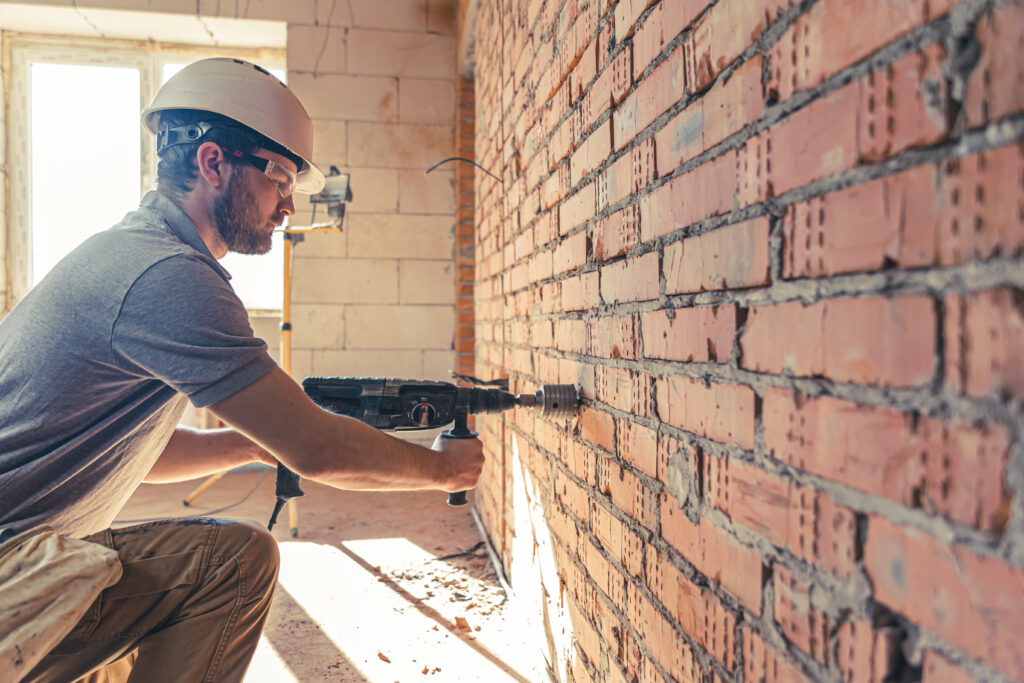
Newton’s villages were laid out well before anyone was thinking about excavator clearances. Setbacks are tight, side yards are narrow, and on-street parking regularly backs right up to where a machine would need to sit. On many lots, one side of the house simply has more usable width than the others, and that side often decides whether excavation is mechanical or has to be done by hand.
Hand digging is slower and costs more in labor. But where a mini excavator cannot physically turn, or where getting one in would mean removing a fence, a mature shrub bed, or part of a walkway, hand work is sometimes the only realistic option. Overhead wires, low tree limbs, and gas or water lines running along the property edge add another layer of planning before any machine moves.
We walk the access before we price anything, because the access is often the real variable in the job. That walk-through covers:
What happens to the yard
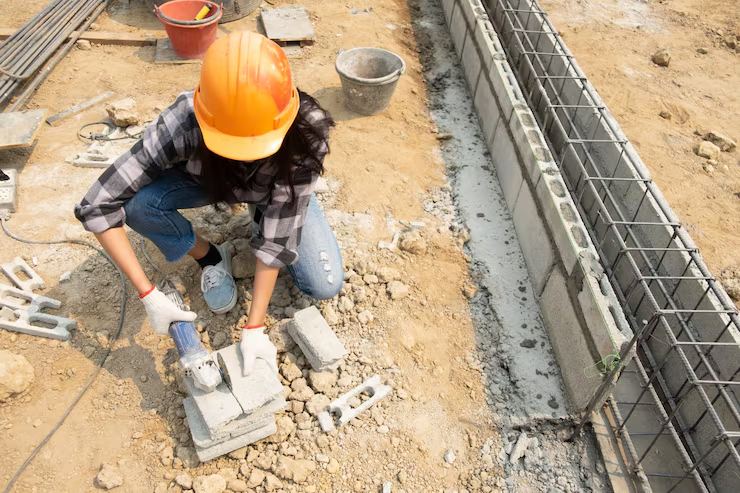
Excavating along a foundation wall means digging a trench down to the footing, which is usually several feet below grade on an older Newton house. That depth, combined with the width needed for a crew to actually work in the trench, means the disturbed area is wider than most homeowners picture when they first hear the word “excavation.”
Anything planted close to the foundation, mature shrubs especially, will not survive that trench intact. Walkways, patios, or a section of driveway apron sitting over the dig line will need to come up before work starts and get reinstated after. Sprinkler lines, low-voltage lighting wire, and buried downspout extensions are the quieter casualties; they are easy to miss until a shovel finds them.
We flag what is in the way during the initial walk-through, not partway through the dig. That includes:
- Plantings and hardscape sitting within a few feet of the wall
- Buried irrigation, lighting, or drainage lines near the work area
- Grading changes needed so water moves away from the repaired wall once backfill settles
The work, in order
Treating the wall
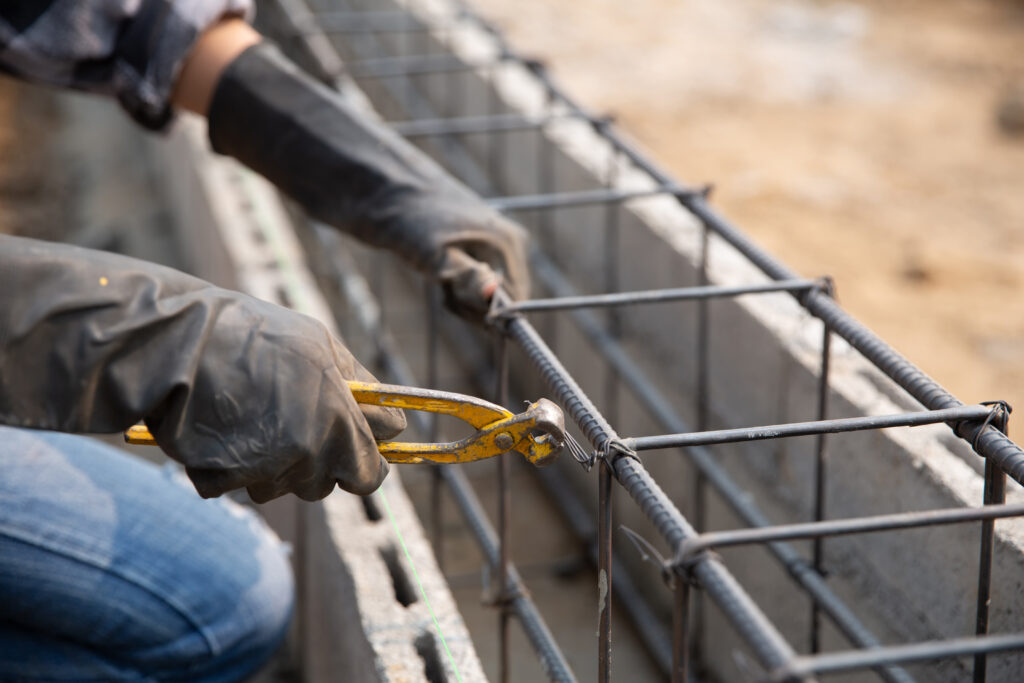
Once the footing is exposed, we clean the wall face, repair cracks and failed mortar joints, then apply a waterproof coating or membrane to the exterior. This step is what actually stops water moving through the stone or block.
Drainage at the footing
A perimeter drain at the base of the wall gives groundwater a path away from the foundation instead of through it. On older Newton lots this is frequently missing entirely, so this step is often new work, not a repair.
Backfill matters as much as the wall
What goes back into the trench affects how well the drain performs for years afterward.
Regrading the surface
The finished grade next to the house needs to slope water away from the wall, not toward it. On flat Newton lots this sometimes means raising the grade noticeably near the foundation before it levels out toward the yard.
When the drive or walk has to come up
If the excavation line runs under a driveway apron or front walk, that surface gets cut and removed before digging and reinstated afterward. It is part of the access plan, not a separate project.
What to document before anyone comes out
Before you call anyone, a little documentation makes the first visit more useful. Note which wall the water or dampness appears on, and whether it tracks with specific storms or shows up steadily regardless of weather. Photograph the affected area, including any visible cracking, efflorescence (the white mineral staining that shows where water has been moving through masonry), or bowing in the wall itself.
Check the grading right outside that section of foundation. Does the ground slope toward the house, is there a downspout discharging close to the wall, or has a patio or driveway settled in a way that now directs water inward instead of away? These details help identify whether the fix is purely excavation and drainage, or whether surface grading and downspout routing are contributing to the problem too. Bring this information to the first visit and the assessment moves faster, because it lets us confirm access and scope before any digging starts rather than guessing at the cause from the outside.

Starting the conversation
Every foundation job on a Newton property starts with the same first question: can a machine get to the affected wall, or does this need to be worked by hand. That answer shapes the timeline and the approach more than almost anything else, and it is specific to your lot, not a general rule for the town. Narrow side yards, mature trees close to the foundation, shared driveways, and tight setbacks between older Newton homes all factor into whether we are bringing in excavation equipment or working the repair by hand from the inside or outside of the wall.
What to check and write down first
These are the pointers that help most before anyone visits.
- Note where and when. Which wall, which corner, and whether it follows heavy rain, snowmelt or a particular season.
- Photograph it dry and wet. Take pictures of the same spot on a dry day and again after rain.
- Look at the outside. Check whether the ground beside that wall slopes toward the house, whether a downspout empties near it, and whether anything piles water against it.
- Check for movement. Look for horizontal cracks, a wall that leans in, or stones that have shifted. Mark the ends of a crack with a pencil and date it, so changes can be seen.
- Check the stonework. Press on the mortar. If it crumbles or sands away, say so.
- Think about access. Where could a machine stand, and what is in its way? Tell us who shares the drive or boundary.
- Leave it as you found it. Do not seal or patch the wall before we see it. It hides what we need to look at.
Questions we get asked
Is this the same crew that does driveway paving?
No. Foundation excavation and drainage work is a separate trade from paving, even though the same company may handle both. The equipment, the sequence, and the skills involved are different from laying or repairing asphalt or pavers.
How do you know if the problem is the foundation or the grading?
Often it's both. A wall with no exterior membrane will let water through on its own, but poor grading or a downspout discharging too close to the house accelerates it. We check both during the site walk-through before scoping the work.
Can this be done without digging up the whole yard?
The excavation is limited to the section of wall affected and whatever access path a machine or crew needs to reach it. On tight Newton lots that path is often narrower than people expect, but anything in the direct dig line, plantings, walkways, or a driveway apron, does need to come up.
What if a machine can't reach the wall at all?
On some Newton lots, narrow side yards or fixed obstructions mean there's no path for an excavator. In those cases the dig is done by hand. It takes longer and costs more in labor, but it's often the only option on the most tightly built lots.
Next step
Call us on (413) 337-3772. Tell us which wall, what you have seen, and how the lot slopes around it. We have worked across Middlesex County since 1988, and we will tell you plainly what is likely going on and whether outside work is the right answer.