
Foundation Work in Sharon, MA
Water coming through a basement wall after heavy rain. A damp patch that never quite dries out, even in a dry July. A corner of the foundation that looks like it’s bowing inward, or mortar between the stones that crumbles when you touch it. If any of that sounds familiar, you’re not dealing with a paving problem. You’re dealing with a foundation that’s losing its fight with the ground around it, and that fight is won or lost outside the house, not inside it.
Sharon has a lot of older homes sitting on fieldstone and rubble foundations, especially around the lake and on the wooded, rolling lots that make up much of the town. Those foundations were never built with a membrane or a perimeter drain. They weren’t built to stop water. They were built to hold up a house, and for decades they do that well enough. What they don’t do is keep water out when the soil around them stays saturated, when snowmelt pools against a wall, or when grading around the house has shifted over fifty or eighty years so that water now runs toward the foundation instead of away from it.
Why water moves through the wall, not under it
With a stone or rubble foundation, water doesn’t need a crack to get in. It moves through the joints between stones, through old mortar, through the wall itself, because there’s no barrier stopping it. Hydrostatic pressure from saturated soil pushes water through the path of least resistance, and in this kind of wall that path is everywhere. Interior sealants and coatings can slow the visible seepage, but they’re treating where the water shows up, not where it’s coming from. The water is still in the ground, still pressing against the wall, and it will find another way through.
That’s why this is exterior work. It means excavating down the outside of the wall, addressing the wall itself, and giving water somewhere else to go before it ever reaches the foundation. It’s more disruptive than a coating applied from inside, and it costs more up front, because the scope of the job is bigger. But it’s the difference between managing a symptom indefinitely and actually changing what happens to water at that wall.
On the kind of lot common in Sharon, with mature trees close to the house and a drive winding through them, the first question we ask isn’t about the wall. It’s about how a machine gets to it.


What Our Clients Say
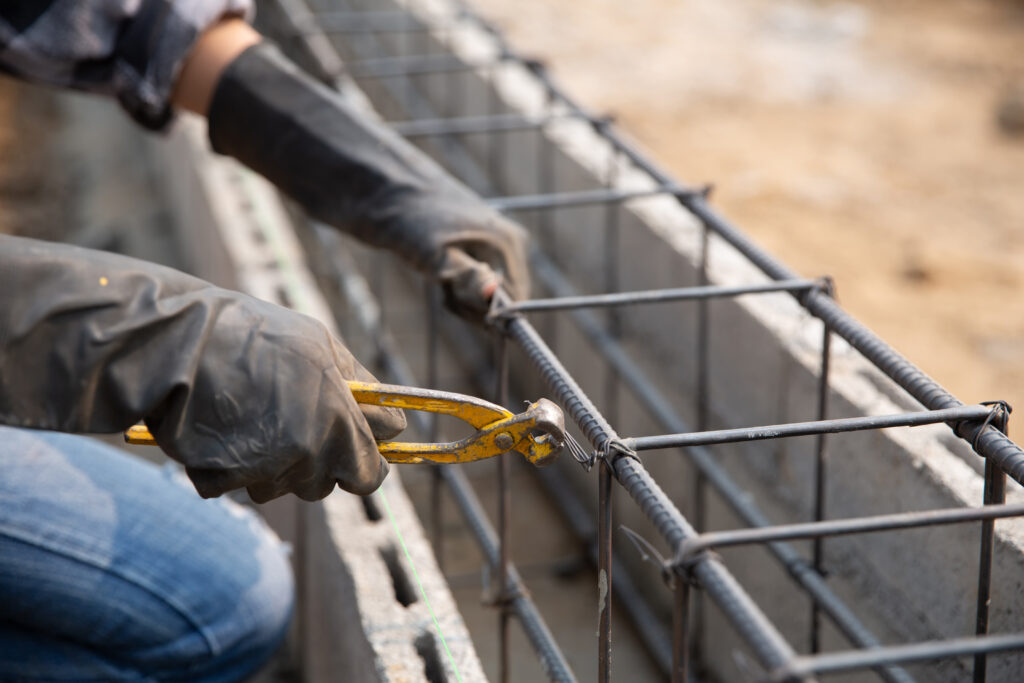
Access decides the approach
A lot of Sharon properties sit back from the road behind a long drive that curves through oak and pine, with the house itself set into a slope rather than a flat pad. That’s attractive to live with and awkward to excavate around. If the affected wall faces the driveway, a mini excavator can usually reach it without much disturbance. If it faces the back or a side with mature trees close to the foundation, the job changes: tighter equipment, hand digging near roots, sometimes a different access route cut through the yard rather than the drive.
Sharon’s older neighborhoods near the center often pair narrow driveways with established landscaping, stone walls, or septic fields that further limit where equipment can go. Newer construction off the wider roads tends to be more forgiving, but slope still matters once you’re working against a hillside foundation. We also factor in where spoil and materials get staged, since a cramped lot leaves little room for a dumpster or a pile of backfill without blocking access entirely.
What happens to the ground around the wall
Excavating around an old foundation means removing whatever sits against that wall first: plantings, a section of lawn, sometimes a patio or a run of the driveway itself if it was built close to the house. On sandy soil, which covers a good part of Sharon, digging tends to be cleaner and the trench holds its shape better than it would in heavier ground. That sandy base is also part of why drainage work here tends to perform well once it’s in, since water that’s directed away from the wall actually keeps moving instead of sitting in clay the way it would elsewhere.
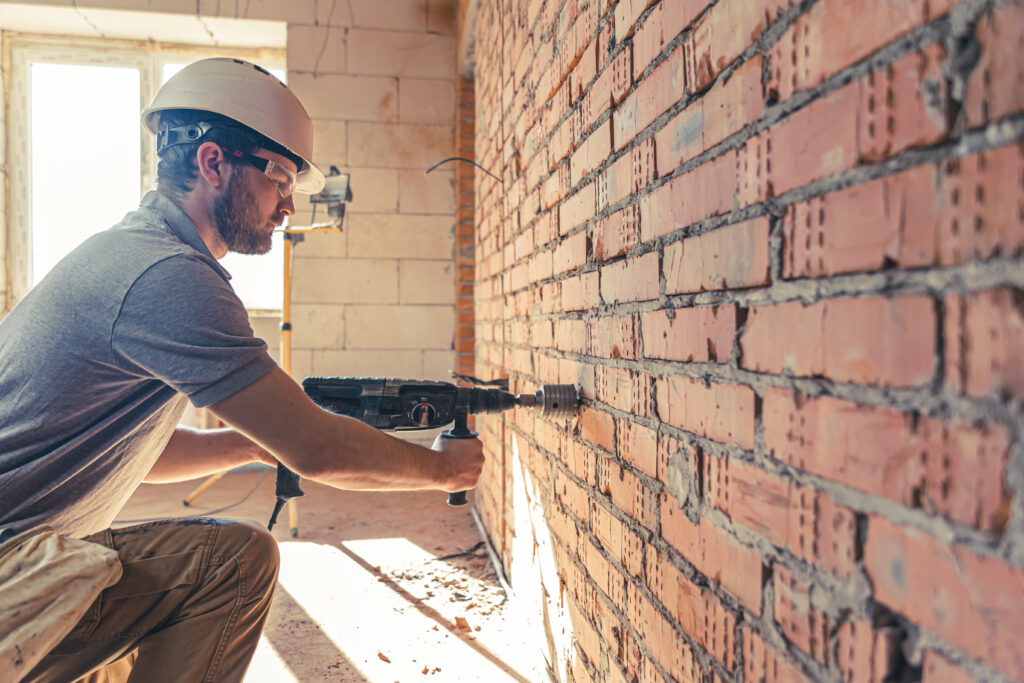
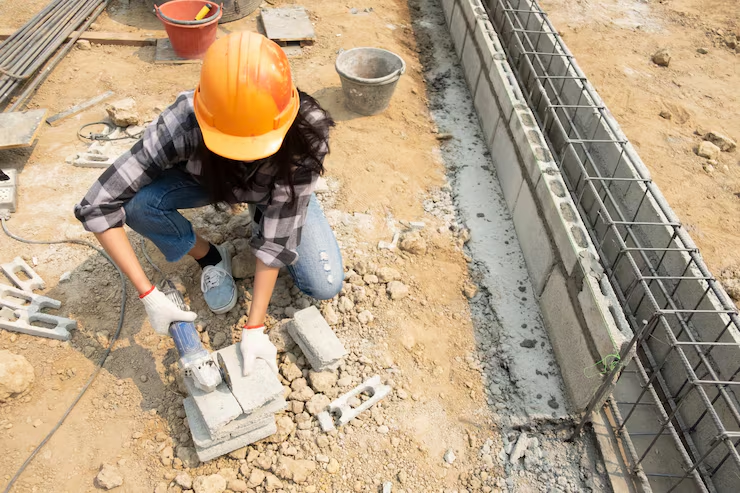
The work, in order
Treating the wall itself
Once exposed, deteriorated mortar and loose stone are repaired, then a waterproof membrane is applied to the wall's exterior face.
Drainage and backfill
A perimeter drain at the footing routes water away from the wall instead of through it. We backfill with drainage in mind, not just to fill the hole, keeping water moving toward the drain rather than pooling against the membrane.
Reinstating the ground
Final grade slopes away from the foundation on every excavated side. On a sloped Sharon lot that often means re-establishing a fall that was lost years ago, so water starts running off the way it should have all along.
If the driveway sits close to the wall
In Sharon, where a driveway or walkway runs close to the excavated wall, a section may need to come up for access and go back afterward. That’s separate from the foundation work itself, priced and scheduled on its own.
Shade, roots and surface moisture
Mature trees near a Sharon home keep that side shaded, so the soil stays damp long after rain. That persistent moisture often contributes to foundation trouble, and it shapes how we plan drainage around the wall.
The work in sequence, start to finish
Sequence matters more than any single step. Work starts with access and excavation down to the footing, clearing whatever sits in the way on that side of the Sharon house, with planting, hardscape or lawn in the excavation path removed and set aside first. With the wall exposed, we address the stone and mortar, then apply the exterior membrane.
A perimeter drain goes in at the footing, tied into wherever that water can actually go on the property, whether that’s daylight down a slope or a dry well. Backfill goes in in stages so it settles properly and doesn’t undo the drainage work on its way down. Last comes the surface: regrading so water runs away from the house, and reinstating whatever had to come out, whether that’s lawn, planting, or a section of hardscape.
Each stage depends on the one before it. Rushing the backfill or skipping the grading step is how a repaired foundation starts taking on water again within a couple of seasons, just more slowly than before.

What to check before you call
Before you call about a foundation problem in Sharon, a little observation on your end makes the first conversation far more useful. Note which wall the water, crack, or damp patch shows up on, and whether it tracks with heavy rain, spring snowmelt, or appears regardless of weather. Sharon’s mix of clay-heavy soil and older fieldstone and poured foundations means timing often points to the cause. Photos of the affected area, taken both inside and outside along that same wall, help us see patterns before we ever arrive.
- Does the ground outside that wall slope toward the house instead of away from it?
- Is a downspout or sump discharge emptying right next to the foundation?
- Does that section of yard stay visibly wet longer than the rest of the property after rain?
- Are nearby trees or shrubs close enough for roots to be a factor?
What to check and write down first
These are the pointers that help most before anyone visits.
- Note where and when. Which wall, which corner, and whether it follows heavy rain, snowmelt or a particular season.
- Photograph it dry and wet. Take pictures of the same spot on a dry day and again after rain.
- Look at the outside. Check whether the ground beside that wall slopes toward the house, whether a downspout empties near it, and whether anything piles water against it.
- Check for movement. Look for horizontal cracks, a wall that leans in, or stones that have shifted. Mark the ends of a crack with a pencil and date it, so changes can be seen.
- Check the stonework. Press on the mortar. If it crumbles or sands away, say so.
- Think about access. Where could a machine stand, and what is in its way? Tell us who shares the drive or boundary.
- Leave it as you found it. Do not seal or patch the wall before we see it. It hides what we need to look at.
Questions we get asked
How do I know if this is a foundation problem and not just a wet basement from humidity?
Humidity causes a general dampness that's fairly even throughout the space. A foundation issue usually shows up at a specific wall or corner, often tracking with rain or snowmelt, and may come with visible staining, efflorescence, or crumbling mortar at that spot.
Can this be fixed from inside the basement instead?
Interior sealants can reduce visible seepage for a while, but they don't stop water moving through a stone or rubble wall from the outside. They treat where the water appears, not where it's coming from, so the underlying pressure against the wall doesn't change.
Will my landscaping or driveway be disturbed?
Anything in the way of the excavation on the affected side, plantings, lawn, sometimes a section of walk or drive, has to come out to get access and goes back afterward. We walk the site first so you know exactly what's affected before work starts.
Does this need to happen in a particular season?
It can be done across most of the year, though a saturated or frozen site affects how the excavation goes. We assess ground conditions on the day we look at the property rather than ruling a season out generally.
How is this different from the paving and driveway work you also do?
Foundation work is excavation, structural and drainage work around the house itself. It's a different trade from paving a driveway, even though the same company handles both and understands how drainage around a foundation can relate to drainage across a drive or walkway on the same property.
Next step
Call us on (413) 337-3772. Tell us which wall, what you have seen, and how the lot slopes around it. We have worked across Middlesex County since 1988, and we will tell you plainly what is likely going on and whether outside work is the right answer.