
Foundation Work in Westborough, MA
A damp patch that will not dry out, a stain spreading across the basement wall every time it rains, or a corner of the foundation that looks like it is pushing inward — these are not cosmetic problems. They are signs that water is finding its way through the foundation wall itself, and that the ground around your house in Westborough is no longer doing its job.
This is not paving work, and we want to be clear about that up front. We do driveways and we do foundation drainage and excavation, and we treat them as separate jobs because they are separate jobs. If you came here with a wet basement or a cracking wall, this page is about that, not about asphalt or pavers.
Why older Westborough houses leak where they do
Westborough has a mix of housing stock: older homes near the center and along the corridor sitting on original fieldstone or rubble foundations, and newer subdivision construction with poured concrete. The older homes are the ones we see the most water in. Fieldstone and rubble foundations were never built with a membrane or a perimeter drain. The wall itself is porous. Water in the soil moves through the stone and mortar joints, not under the footing, which is why sealing the inside of the wall rarely solves anything for long.
Newer poured foundations can still take on water if the original backfill was never properly drained, or if grading around the house has flattened out over the years from landscaping, mulch buildup, or a patio or walkway installed too close to the wall. We also see this with homes built on the area’s heavier clay soils, which hold water against the foundation far longer than sandier ground does, giving it more time to work through any weak point in the wall.
Either way, the water has to be stopped on the outside, where it is entering, not managed on the inside, where it has already arrived. That means excavation: digging down along the affected wall to expose it, treating the wall itself, and rebuilding the drainage path so water moves away from the house instead of through it. Depending on what we find once the wall is exposed, that can mean:
- Parging or repointing deteriorated mortar joints on stone and rubble walls
- Applying a waterproof or damp-proof coating directly to the exposed wall
- Installing or replacing a perimeter drain tile at the footing, tied into daylight or a sump
- Backfilling with washed stone instead of the original soil, so water drains down rather than sitting against the wall
- Correcting the final grade so the slope carries water away from the house


What Our Clients Say
The Mechanism: Water Through the Wall, Not Under It
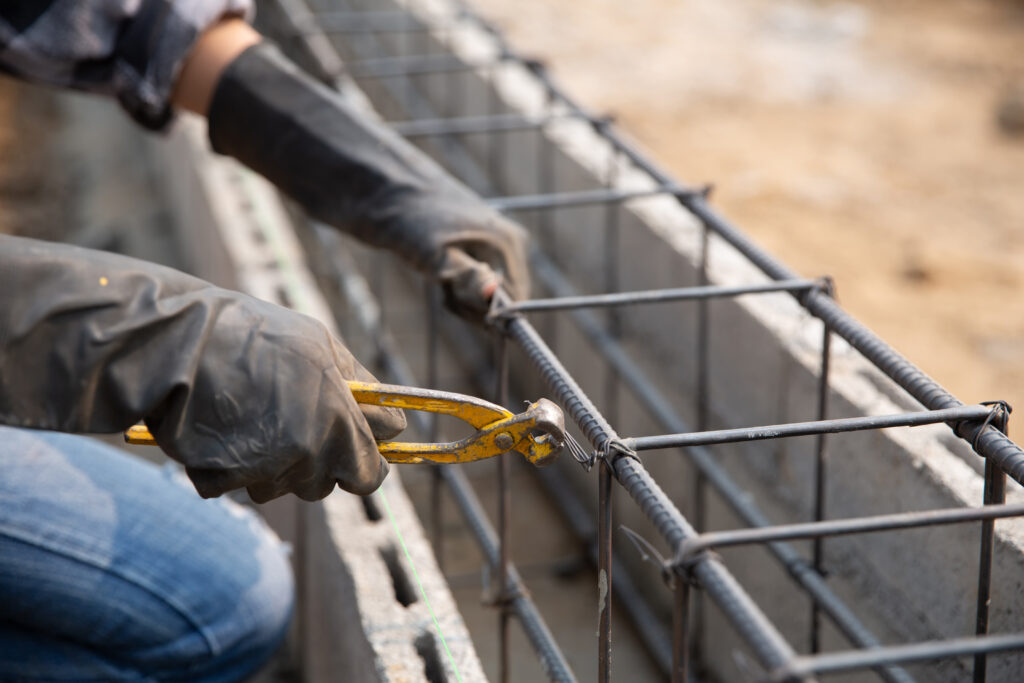
A rubble or fieldstone foundation does not fail like a crack in a slab. It seeps. Groundwater and surface water saturate the soil against the wall, and hydrostatic pressure pushes that moisture through the joints between stones. Over time the lime mortar common in Westborough’s older foundations softens, washes out, and the wall loses structural integrity along with its ability to keep water out.
This is a slow process, which is why it is so often missed until the damage is well established. A bowing wall or a section that has begun to crumble did not happen in one storm. It happened over years of water finding the same path, every time it rained or every spring thaw pushed frost-heaved soil against the stone.
Why This Is an Outside Job
Interior waterproof coatings and sealants treat the symptom. They stop water from showing on the inside face of the wall, but the water is still there, still saturating the stone or block, still under pressure against the footing. The underlying cause has not changed, and on older Westborough properties with fieldstone or parged foundations, that pressure tends to find a new way in eventually.
Exterior work addresses the cause directly: excavate down to expose the wall, apply a membrane or coating suited to the wall type, repair any cracks or deteriorated mortar joints from the outside, and install drainage that actually carries water away from the foundation instead of letting it pool against it. On many Westborough lots, that means tying new perimeter drainage into grading that routes water toward the street or an existing dry well rather than back toward the house.
The work, in order
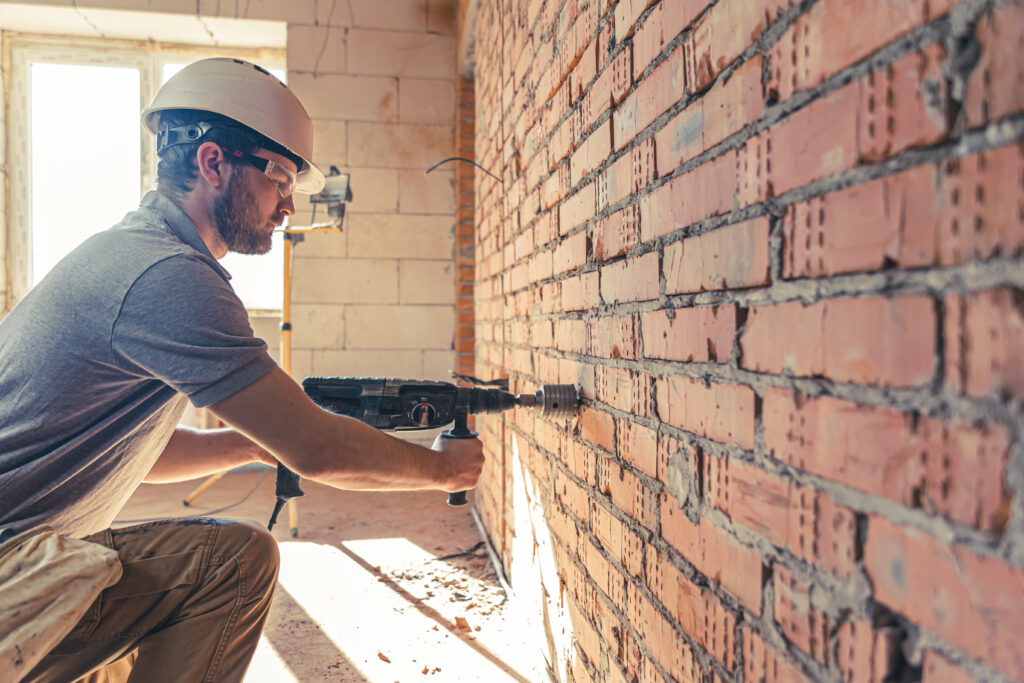
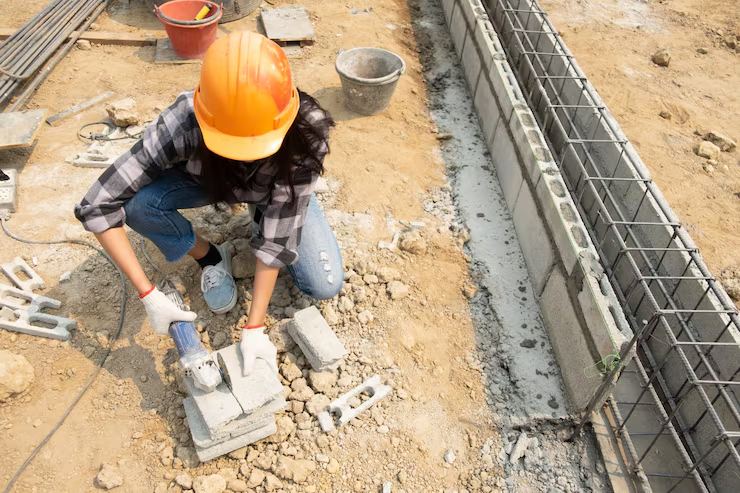
Excavation starts at the affected wall and works along its length, exposing the foundation from the footing up to grade.
Plantings, shrubs, and any hardscape against that wall usually have to come out first.
Once exposed, the Westborough wall gets cleaned, repaired where mortar has washed out or cracked, and treated with an appropriate exterior membrane. We check footing depth and drainage too, so the fix addresses the actual cause, not just the symptom.
A drainage path is rebuilt against the footing so water moves away from the wall instead of soaking into it season after season.
Backfill goes in with drainage in mind, placed and compacted in lifts around Westborough foundations, with the final grade sloped to carry surface water away from the house, protecting footings, basements, and nearby driveways from pooling and erosion.
Access Decides the Approach in Westborough
Westborough’s housing is a genuine mix. Some lots, especially the newer subdivision streets off Flanders Road and near Bowman Street, are wide and level enough that an excavator can get straight to the affected wall with no detours. Older homes closer to the center, and some of the commercial frontage along Route 9, sit tighter to the property line or have mature trees, retaining walls, and foundation plantings in the way.
Where access is open, excavation is more straightforward, spoil removal is quicker, and the job moves faster overall. Where it is not, we may need to hand-dig part of the run, remove a section of fence or hardscape temporarily, reroute downspouts, or bring in smaller equipment that can fit the space without damaging the yard. Sloped lots near the reservoir side of town add another wrinkle, since grading affects how water moves around the foundation once the repair is backfilled.
We look at access on the first visit, because it genuinely changes how the job is planned, priced, and how long it takes, more than almost anything else about the foundation itself.

Regrading and What Comes Back Afterward
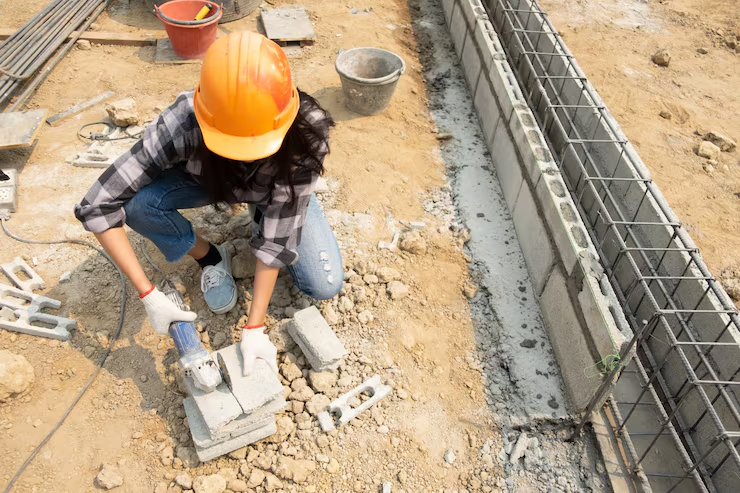
Once drainage is rebuilt and backfill is in, the ground around the foundation gets regraded so it slopes away from the house rather than toward it. That slope is doing real work going forward — it is the first line of defense against the same water problem returning in a few years.
If a walkway, patio, or section of driveway sat against the excavated wall, it may need to come up before we start and be reinstated afterward. That is coordination we handle as part of the same project, even though reinstating paved surfaces is a different scope than the foundation work itself. We will tell you up front if anything like that applies to your property, and what it adds to the timeline.
What to check and write down first
These are the pointers that help most before anyone visits.
- Note where and when. Which wall, which corner, and whether it follows heavy rain, snowmelt or a particular season.
- Photograph it dry and wet. Take pictures of the same spot on a dry day and again after rain.
- Look at the outside. Check whether the ground beside that wall slopes toward the house, whether a downspout empties near it, and whether anything piles water against it.
- Check for movement. Look for horizontal cracks, a wall that leans in, or stones that have shifted. Mark the ends of a crack with a pencil and date it, so changes can be seen.
- Check the stonework. Press on the mortar. If it crumbles or sands away, say so.
- Think about access. Where could a machine stand, and what is in its way? Tell us who shares the drive or boundary.
- Leave it as you found it. Do not seal or patch the wall before we see it. It hides what we need to look at.
Questions we get asked
Can you just seal the inside of the wall instead of digging outside?
You can coat the inside, and it will stop water from showing on that surface for a while. But the wall is still saturated and under pressure from the outside, so the underlying cause is untouched. Most interior-only fixes end up needing exterior work eventually anyway.
How do you know which wall needs excavating?
We start from where the water is actually showing up inside, trace it to the most likely point of entry on that wall, and confirm with the outside grading and conditions. Sometimes more than one wall is involved if grading around the whole house is flat.
Will my landscaping be destroyed?
Plantings and hardscape directly against the excavated wall usually have to be removed, and some won't survive being moved. We will tell you before work starts what is in the path and what the realistic options are.
Is this the same crew that does your driveway paving?
Foundation excavation and drainage is a separate scope of work from paving, and we treat it that way in planning and in the crew assigned. If your project also involves a driveway or walkway being disturbed, we coordinate both pieces, but they are scoped and priced separately.
How long does foundation excavation and drainage work take?
It depends on the length of wall affected, how deep the footing sits, and how much access the equipment has. A tight lot with mature plantings in the way takes longer than an open, level stretch. We can give you a realistic timeframe after seeing the site.
Next step
Call us on (413) 337-3772. Tell us which wall, what you have seen, and how the lot slopes around it. We have worked across Middlesex County since 1988, and we will tell you plainly what is likely going on and whether outside work is the right answer.