
Foundation Work in Westwood, MA
Water tracking down a basement wall after a heavy rain. A corner that stays damp long after the rest of the house has dried out. A section of foundation that bows inward, or mortar joints that crumble a little more every winter. If this is why you searched, you are not dealing with a cosmetic issue, and it is not going to be solved from inside the house.
Westwood’s older neighborhoods sit on wooded, generous lots, with houses set back behind mature trees and drives that curve in rather than run straight to the street. Many of those houses were built decades before anyone poured a continuous concrete footing with a membrane and a perimeter drain. They sit on fieldstone, rubble, or early poured walls that were never meant to hold back water on their own. For years that is fine. Then a wet spring, a changed grade, or a gutter that’s been dumping water against the same spot for twenty years tips it over.
Why water gets in
The common assumption is that water comes up from underneath. Mostly it does not. It moves laterally, through the wall itself – through old mortar joints, hairline cracks, and the porous stone itself – because the soil outside is holding water against the wall with nowhere else to go. Fix the path the water takes to reach the wall, and the wall stops being the problem.
That is exterior work. Interior sealants and interior drain channels manage water once it’s already inside – they do not stop it from entering the wall in the first place. Excavating the outside of the foundation, treating the wall itself, and rebuilding proper drainage against it addresses the cause instead of the symptom. It is also the harder, more disruptive, and more expensive route, and there’s no honest way around that. Digging a trench along a foundation wall means machinery, spoil, and a section of the yard that is out of commission while the work happens.
On a lot like the ones common in Westwood, with shade trees and landscaped beds close to the house, that disruption has a real shape. Root systems from mature oaks and maples often run closer to the foundation than people expect, and a planting bed that took years to establish can be in the direct path of the excavation. None of that makes the work impossible. It does mean the approach has to be planned around what is actually there, not around a generic textbook foundation job.


What Our Clients Say
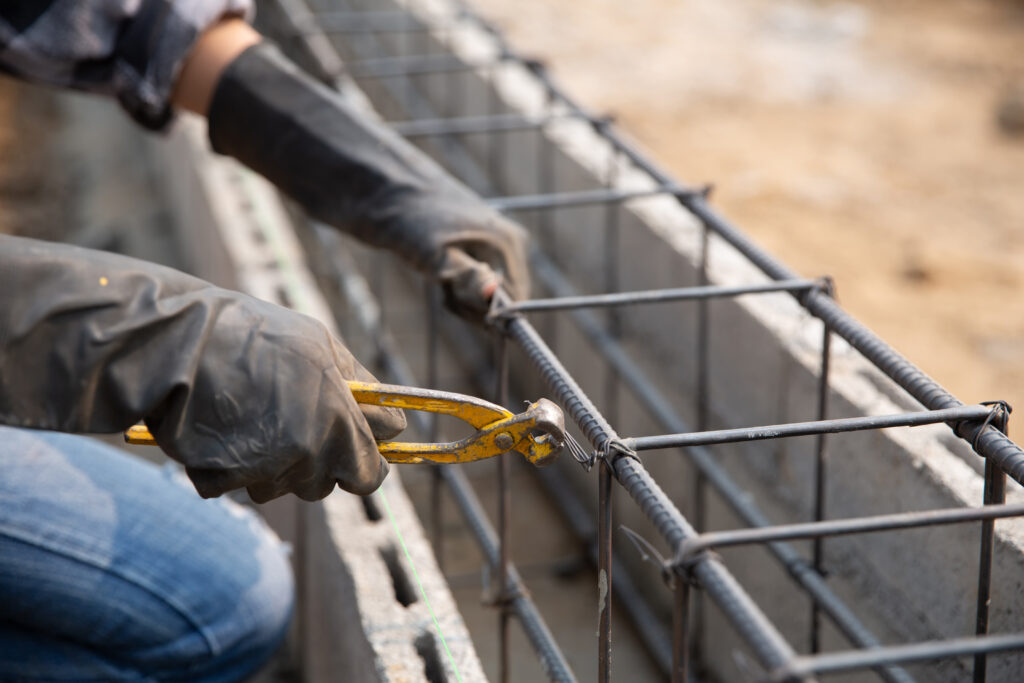
What's actually happening to the wall
A fieldstone or rubble foundation was never built with a membrane behind it. It relies on the mortar and the stone-to-stone fit to resist water, which works until the ground against it stays saturated for long stretches. Once that happens, water finds the path of least resistance through the wall rather than around it – often showing up as damp patches, white mineral staining, or crumbling mortar joints low on the wall.
Poured concrete walls from the early-to-mid 1900s, common throughout Westwood’s older streets, have their own version of the same problem – no exterior waterproofing, and over decades, cracks from settling or frost that give water a direct route in. Block foundations add a third failure point: hollow cores that let water travel sideways and surface several courses above where it actually entered.
Why this is an outside job, not a patch
Hydraulic cement in a crack, or a fresh interior coating, can look like a fix for a season or two. Neither one changes how much water is sitting against the outside of that wall. In Westwood’s clay-heavy soil, that water doesn’t drain away quickly – it holds against the foundation, builds hydrostatic pressure, and keeps pushing until it finds a way in. If the saturation continues, that water finds the next weak point – a different joint, a different crack, a cove where wall meets slab – and the same problem reappears somewhere else on the same wall, often worse than before.
Treating the exterior means excavating down to the footing, addressing the wall surface directly, and rebuilding the drainage path so water moves away from the foundation instead of pooling against it. That usually involves:
- Correcting grading and downspout discharge so water sheds away from the house
- Installing or repairing footing drains and a clear gravel drainage path
- Waterproofing the wall surface itself, not just sealing the inside
The work, in order
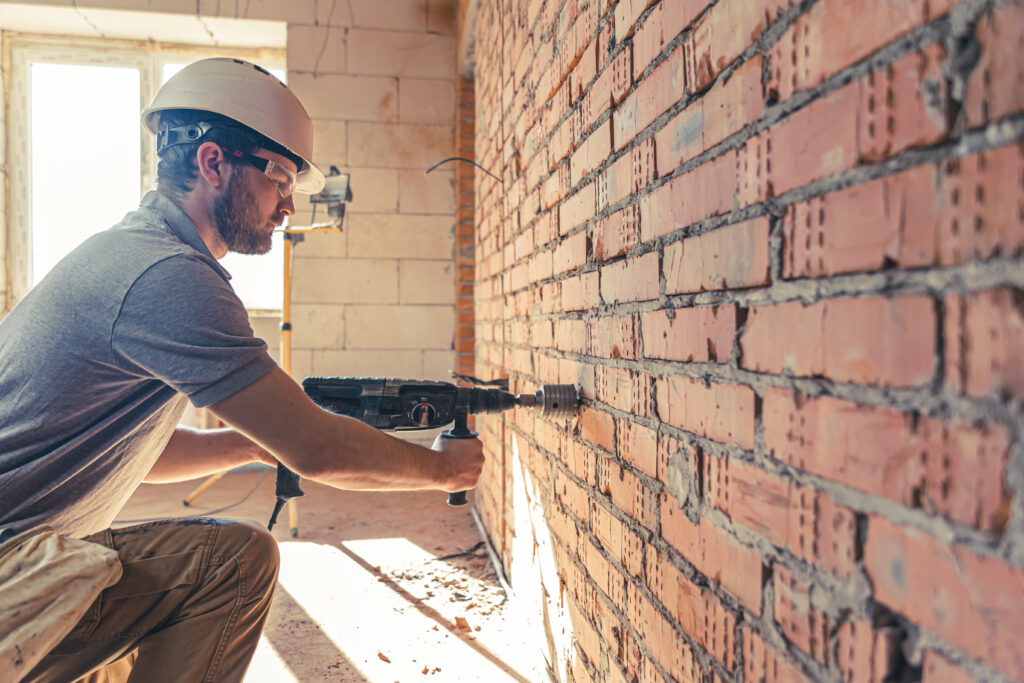
Access and excavation
A machine needs a clear run to the affected wall.
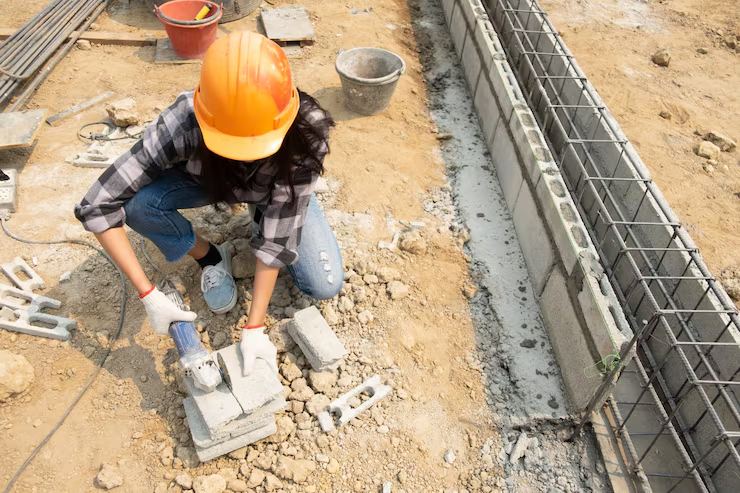
Protecting what's nearby
Mature trees close to a foundation mean root work is sometimes unavoidable.
Wall treatment
Once the Westwood wall is exposed down to the footing, the surface is cleaned, cracks are sealed, and a waterproof coating or membrane is applied to resist moisture before anything goes back against it.
Drainage and backfill
A drain path at the base of the wall gives water somewhere to go other than back into the stone or concrete. Backfill is placed to keep that path working, not just to fill the trench.
Reinstating the ground
Once drainage is in, the surface grade gets rebuilt so water sheds away from the house rather than settling back toward the wall it just came from.
Grade, drives, and what has to move
On the wooded, curving drives common in Westwood, the finished grade next to the house often needs to slope away more decisively than it does now – sometimes a modest change, sometimes a more deliberate regrade if the land has been settling toward the foundation for years. Where a section of driveway or walkway sits close enough to the excavation line, it may need to be lifted or removed to get machinery to the wall, then reinstated once the drainage and backfill are complete.
This is where the project touches paving without being a paving job. The foundation work decides what happens at the surface – not the other way around. Reinstating a drive or walk after excavation is a separate step, done once the wall and drainage are finished and the backfill has had time to settle enough to build on.
None of this is guesswork once the excavation is open and the wall is visible. Until then, it’s reasonable groundwork for planning, not a fixed scope.

What to check before anyone comes out
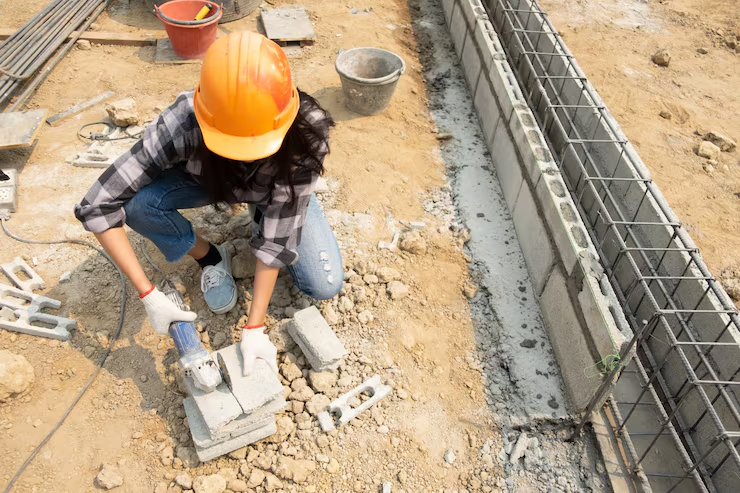
Before scheduling a foundation visit in Westwood, spend a few minutes gathering information that will save time once someone is on site. Note when water or damp appears – after heavy rain, during snowmelt, or more or less constantly – since timing often points to whether the issue is surface runoff, groundwater, or something else entirely. Take photos of the affected wall and the ground outside it, including where downspouts discharge, whether splash blocks or extensions are in place, and whether the grade slopes toward or away from the house. Older Westwood properties with mature landscaping or added patios sometimes have grading that’s shifted over the years without anyone noticing. If there’s a bow, crack, or crumbling section, note roughly where it sits relative to corners, windows, and any interior cracks on the same wall. That record, more than anything else, helps make sense of what’s happening below ground before a shovel goes in. From there, call Driveway Specialists at (413) 337-3772 to talk through what you’re seeing and arrange a visit.
What to check and write down first
These are the pointers that help most before anyone visits.
- Note where and when. Which wall, which corner, and whether it follows heavy rain, snowmelt or a particular season.
- Photograph it dry and wet. Take pictures of the same spot on a dry day and again after rain.
- Look at the outside. Check whether the ground beside that wall slopes toward the house, whether a downspout empties near it, and whether anything piles water against it.
- Check for movement. Look for horizontal cracks, a wall that leans in, or stones that have shifted. Mark the ends of a crack with a pencil and date it, so changes can be seen.
- Check the stonework. Press on the mortar. If it crumbles or sands away, say so.
- Think about access. Where could a machine stand, and what is in its way? Tell us who shares the drive or boundary.
- Leave it as you found it. Do not seal or patch the wall before we see it. It hides what we need to look at.
Questions we get asked
Can't I just treat it from inside?
An interior treatment deals with water after it has come through. It does not stop the wall from taking on water or the joints from deteriorating. For a wall that is only damp, it may be a reasonable short-term measure. For a wall that is failing, the cause is outside.
Will the work leave my basement dry?
We do not promise that. Water behaves differently on every lot, and it depends on the house, the ground and the weather. What exterior work does is deal with the cause rather than the symptom.
How long will the trench be open?
That depends on how much of the foundation is affected, how the ground behaves once it is open, and how easily we can get machinery in. We give you a realistic picture once we have seen the site.
Do I need to move my plants and steps?
Anything within reach of the trench probably does. We walk the wall with you and agree what comes out and what goes back.
Does a shared drive complicate things?
It can. If the machine or soil has to use ground you share, your neighbour should know in advance. We can talk through how to approach it.
What if a machine can't reach the wall?
Then the job is planned differently, with more hand work and smaller loads. It is slower and more demanding, but not usually impossible.
Next step
Call us on (413) 337-3772. Tell us which wall, what you have seen, and how the lot slopes around it. We have worked across Middlesex County since 1988, and we will tell you plainly what is likely going on and whether outside work is the right answer.