
Stone Foundation Waterproofing in Brookline, MA
Water coming through a basement wall after rain, a damp patch that never fully dries, a corner of the foundation that stays wet every spring, or a section of stone that has started to bow or shed mortar — these are foundation problems, not cosmetic ones, and they show up constantly in Brookline’s older housing stock.
Most of Brookline’s Victorian and prewar houses sit on fieldstone or rubble stone foundations built long before anyone used a membrane or a perimeter drain. The wall itself is the only barrier between the soil outside and the basement inside. There is no plastic sheeting, no drainage board, nothing bonding the stones into a sealed system. Water in the surrounding soil simply moves through the wall — through the mortar joints, around individual stones, along the cold joint where the wall meets the footing — until it finds the path of least resistance into your basement.
The pattern of leaking often tells you something before any digging starts. Water that shows up low and along the footing line usually points to hydrostatic pressure building against the base of the wall. Staining or seepage higher up, especially near grade, more often traces back to a downspout, a grading problem, or a window well that’s directing roof and surface water straight at that section of stone. Both situations get fixed from the outside, but the first step is figuring out which one you actually have, because treating the wrong cause wastes money and leaves the real problem untouched.
An interior coating or interior drain system manages water after it has already gotten into the wall. It can reduce what you see on the finished side, but it does nothing to stop water from reaching the stone in the first place. The wall keeps absorbing moisture, and over time that cycle of wetting and drying is part of what loosens mortar and lets stones shift out of place.
Treating the cause means working from the outside:
- Excavating down along the affected section of wall to expose the stone
- Repointing deteriorated mortar and resetting any stones that have shifted
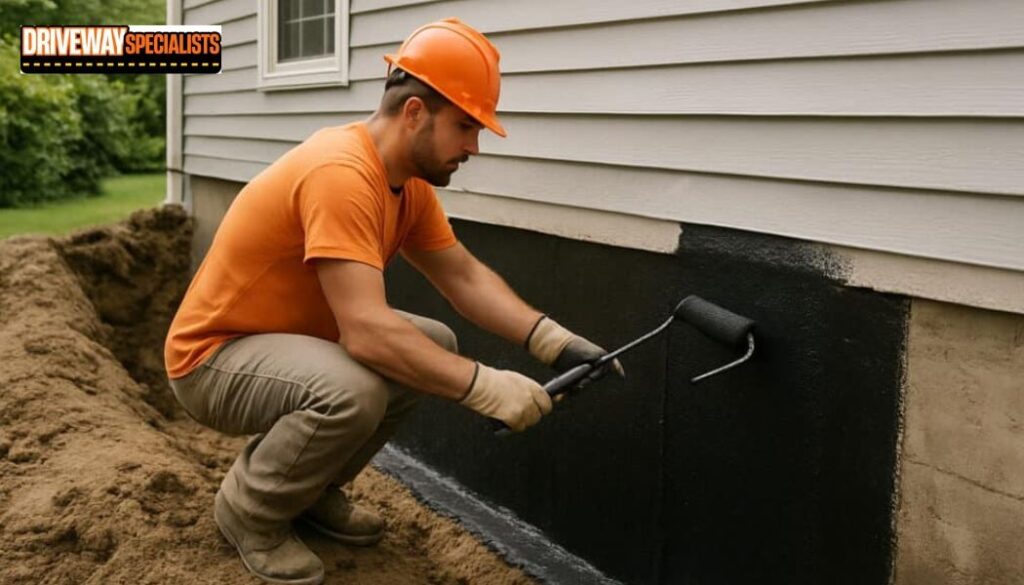
- Applying a waterproof coating or membrane directly to the exterior face
- Installing drainage at the footing to carry water away from the wall
- Backfilling with material that moves water downward instead of holding it against the stone
It is more disruptive and more expensive than an interior fix, and there is no honest way around that. The ground along that wall gets opened up, and whatever sits on it — plantings, a walkway, a section of patio — has to come up first and get restored afterward.


What Our Clients Say

Reading the symptom correctly
Not every wet basement in a Brookline stone foundation means the same thing, and the pattern matters more than the fact that water showed up at all. A wall that weeps steadily during heavy rain points to hydrostatic pressure building up in the soil outside, often worse on older lots with heavy clay content. A single damp corner that tracks with snowmelt or a specific storm direction more often points to grading, a gutter clog, or a downspout discharging too close to the foundation rather than a failure in the wall itself.
What the work looks like in sequence
The sequence is straightforward even when the site is not. Excavation opens a trench down to the footing along the problem section of wall. Anything in that path — shrubs, a fence panel, a short run of walkway — comes out or gets protected first. With the wall exposed, deteriorated mortar and loose stone get addressed and the exterior face is treated and sealed. A drain is set at the footing to carry water away from the wall instead of letting it pool against it. Backfill goes in with material chosen to drain rather than hold water, and the ground is brought back to grade.
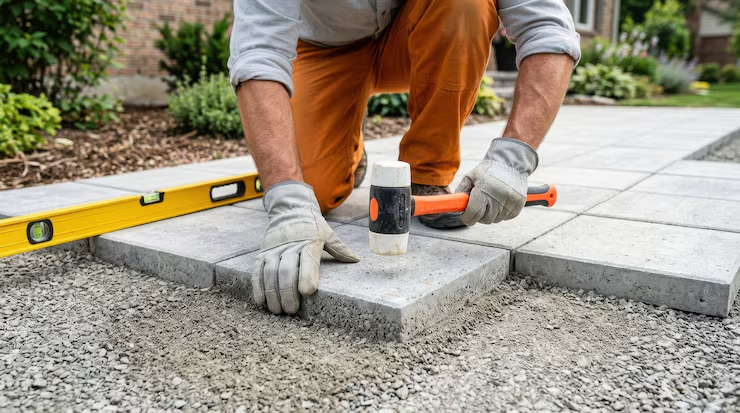
Reinstating the surface is its own step. On a tight Brookline lot that strip of ground often carries a walkway, a planting bed, or the edge of a drive, and that surface has to be rebuilt once the drainage work below it is done and settled.

Access decides the approach
Short drives, narrow side yards, and houses built close to the lot line are the norm in Brookline, and they shape every part of a stone foundation waterproofing job before a single shovel goes in the ground. Some walls can only be reached by hand digging, trench by trench, while others allow a compact machine brought in through a gate if the opening and path are clear. Street parking, permit restrictions, and a lack of staging space for excavated soil and materials also factor into how a crew sequences the work, often more heavily than the actual condition of the wall. On tighter lots, materials may need to be moved in stages rather than dropped all at once.
Regrading after backfill matters as much as the excavation itself. The finished slope along that wall has to carry water away from the house, not back toward it, since poor grading is often what caused the original seepage. On a Brookline lot where space is already tight, getting that slope right the first time avoids a repeat excavation later.
The work in sequence
Access and excavation
We locate the affected wall, clear a route to it and dig down to the footing. On a sloped lot the excavation also has to be supported so the ground above does not move. Digging exposes the real condition of the wall, which can differ from what the inside suggested.
Planting and hardscape
Shrubs, beds, steps and walks along the foundation are in the way of the trench. Some can be lifted and replanted. Some will not survive the move, and stone or paved surfaces are taken up and set aside or replaced. We will walk the area with you before any digging so you know what is staying and what is not.
Wall treatment
Once exposed, the wall is cleaned and assessed. Loose stone is reset and failed mortar is cut out and repointed. A membrane is applied to the outside face so water meets a barrier instead of an open joint. How much repair a wall needs depends on how much it has deteriorated, and that is rarely known until it is open.
Drainage and backfill
At the base of the wall, a drain carries water away from the footing to somewhere it can safely go. On a hillside lot, where that is can be the hardest question on the job. Backfill goes in with material that lets water pass down to the drain rather than pooling against the wall.
Reinstating the ground
The soil is graded back so that water runs away from the house. This is where the surface above the repair matters most.
Before you call
Before you call, walk the basement and note exactly which wall and which corner shows water or damp, and whether it shows up after rain, after snowmelt, or with no clear pattern at all. Many Brookline homes sit on old stone foundations with mortar joints that let moisture seep through slowly, so a little groundwork helps. Outside, check that same spot for pooling water, a downspout discharging too close to the house, window wells filling up, or grading that slopes toward the foundation instead of away from it. That detail speeds up diagnosis.
Pointers before anyone comes out
Most of this is observation, and it makes any visit more useful.
- Note when it happens. Is it after heavy rain, after snowmelt, or all the time? The pattern points to where the water is coming from.
- Photograph it. Take photos of the wall, the floor and the staining, with something for scale. Date them and repeat after the next rain.
- Mark the spot. Note which wall and which corner. Match it to the outside: which side of the house, and what is above it.
- Walk the outside. Look at where gutters discharge, which way the ground slopes at the foundation, and whether water pools after rain.
- Check the downspouts. Water dumped beside the wall adds to the load. Make sure they are not blocked or emptying near the foundation.
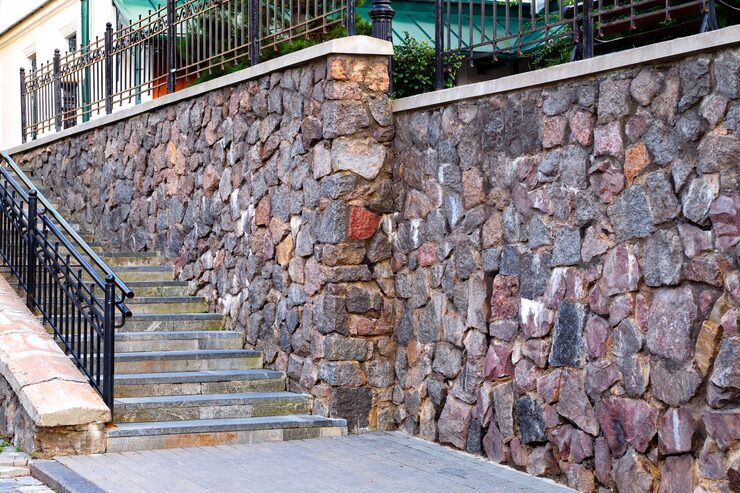
- Look at the stone and mortar. Powdery mortar, bulging or gaps are worth recording. Do not poke at a bowing section.
- Clear what you can. Move stored items away from affected walls so they can be seen and reached.
- Think about access. Where could a machine come in? Is anything shared with a neighbour?
Questions we get asked
Can interior sealant alone fix water coming through a stone foundation wall?
A coating on the inside face can slow visible seepage for a while, but it does not stop water from reaching the wall in the first place. In a fieldstone or rubble wall, water keeps moving through the stone and mortar joints behind the coating, so it tends to resurface somewhere else along the same wall, often at a joint or the base of the footing.
Will the excavation damage plantings or a walkway next to the house?
Anything in the dig path along the affected wall has to be moved or accepted as disturbed. On a Brookline lot this is usually a narrow strip of plantings, a short run of walkway, or a section of fence. We go over what is in that path before digging starts so there are no surprises.
How do you get equipment to the back or side of a Brookline house with no driveway access?
It depends on the lot. Some sides can only be reached by hand digging or a compact track machine brought through a gate or side yard. We look at the actual access before pricing the job, because it changes both the method and the amount of disruption.
Does the town need to be involved if the house is in a local historic district?
Exterior foundation work itself is usually below grade and not visible once finished, but if hardscape, fencing, or anything visible from the street has to be altered to get access, that can bring the property's historic district rules into play. Check your property's status before work starts.
What should I do before calling about a wet basement wall?
Note which wall and which corner the water or damp shows up on, whether it tracks with rain or snowmelt, and look outside at that spot for pooling, a downspout discharging too close to the house, or grade that slopes toward the foundation instead of away from it.
Next step
If water is coming through an older stone foundation in Brookline, we will come and look at the wall and the way in. We have worked on homes like yours for 35+ years, and the family has been doing it since 1988.