
Stone Foundation Waterproofing in Carlisle, MA
Water is coming through the wall, not under it. Maybe it’s a damp line that shows up every spring and never fully dries, a corner of the basement that smells wrong year-round, or a section of fieldstone that’s started to bow, flake, or push mortar out from between the stones. If the house is old enough to sit on a rubble or fieldstone foundation, which describes a good number of homes on the older roads around Carlisle, this is not a basement problem. It’s a foundation problem, and it has to be solved from outside.
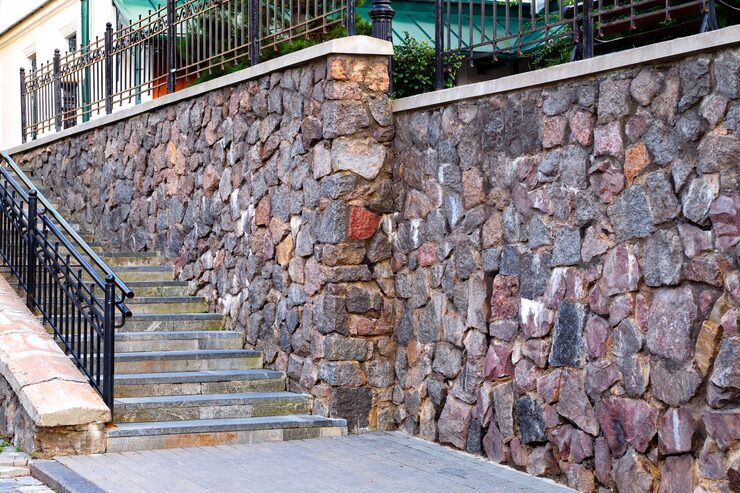
Fieldstone and rubble foundations were built without a membrane and without a perimeter drain. The stones themselves aren’t the barrier; the mortar and the packed earth around them were expected to do some of that work, and over decades that packing settles, cracks, and opens paths. Water in the surrounding soil doesn’t pool under the slab and rise – it moves laterally through the wall itself, following the mortar joints and the gaps behind stones that have shifted. That’s why interior sealants and paints only ever buy time. They coat the inside face of a wall that’s still wet on the other side, and the moisture finds a new path or just pushes the coating off.
Treating the cause means getting to the outside of the wall: excavating down to the footing, cleaning the stone face and repointing what’s failed, applying a proper waterproof coating or membrane, and installing a drain line that actually carries water away from the footing instead of letting it sit against the stone. That’s a bigger, slower, more disruptive job than anything done from inside, and it costs more because of it. We won’t pretend otherwise. But it’s the only approach that addresses what’s actually happening instead of hiding it for a season or two.
On the kind of lot common in Carlisle – two acres, a long private drive cut through trees, the house set back and often close to ledge – the first real question isn’t the wall at all. It’s whether a machine can get to the affected side of the house. Conservation land abutting the property, mature trees close to the foundation, and shallow bedrock all shape what excavation is even possible before anyone talks about the wall itself. We’ve worked jobs here where the dig had to be done by hand or with a mini-excavator brought in on steel plates because there was no other way to reach the back corner of the house without taking down trees the owner wanted kept.
Before any of that gets sorted out, a few things are worth checking from the outside that often point to where the water’s actually getting in:
- Grading that slopes toward the foundation instead of away from it, especially near downspouts
- Gutters that overflow or discharge too close to the wall
- Visible mortar loss, bulging stones, or efflorescence (the white chalky residue) on the exterior face
- Low spots or depressions in the soil that collect standing water after rain


What Our Clients Say

Getting to the Wall
Access decides the plan before the wall does. A machine needs a clear path and room to turn and stage spoil, and on a wooded Carlisle lot that path often doesn’t exist yet. Narrow drives, stone walls along the property line, specimen trees close to the foundation, and ledge sitting a foot or two under the topsoil all limit where and how deep a machine can dig along that wall.
The Work, In Sequence
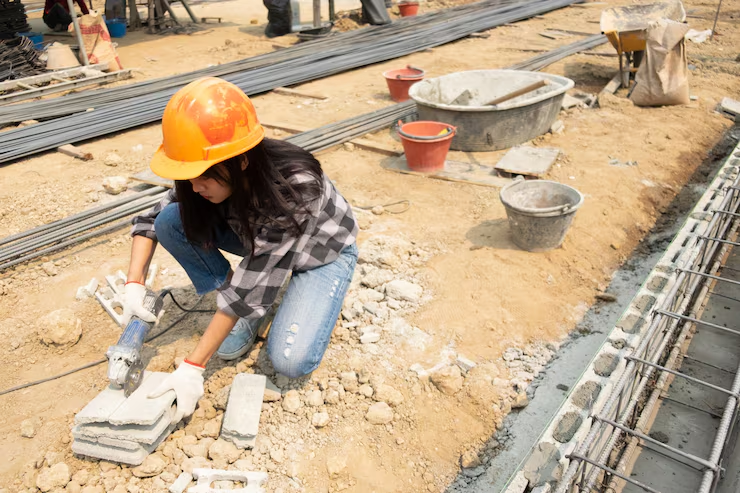
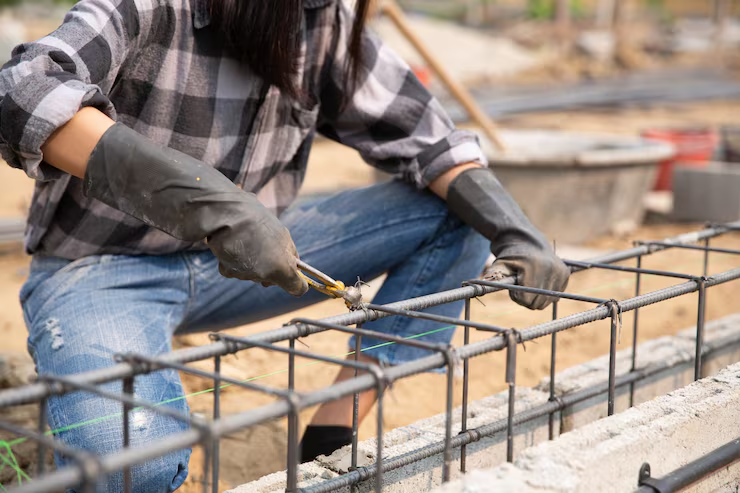
Once a machine can reach the wall, the sequence is fairly consistent. Soil comes away from the foundation down to the footing, exposing the full height of the stone. Whatever sits in that strip – plantings, a stone path, an edge of lawn – comes out first, and on an older Carlisle property that sometimes means moving things around established trees rather than through them, which slows the dig but protects root systems that took decades to establish.
With the wall exposed, the stone face gets assessed and treated directly, then a drainage path is built against it so water moving through the surrounding soil has somewhere to go other than through the mortar joints. Backfill goes back in a way that supports drainage rather than packing the wall tight again, and the ground gets reshaped at the surface last.
After the Dig: Regrading the Surface
Reinstating the ground around a Carlisle foundation usually means more than raking soil back into place. The grade right against the house has to shed water away from the wall, not toward it, which is exactly the condition that caused trouble in the first place if it was ever wrong. On a sloped or wooded lot, where clay soils common to this area hold moisture longer than sand or loam, that can mean rebuilding a short run of grade from scratch rather than simply smoothing it over. Backfill goes in in lifts, compacted in stages, so the soil doesn’t settle unevenly and create a new low spot a season later.
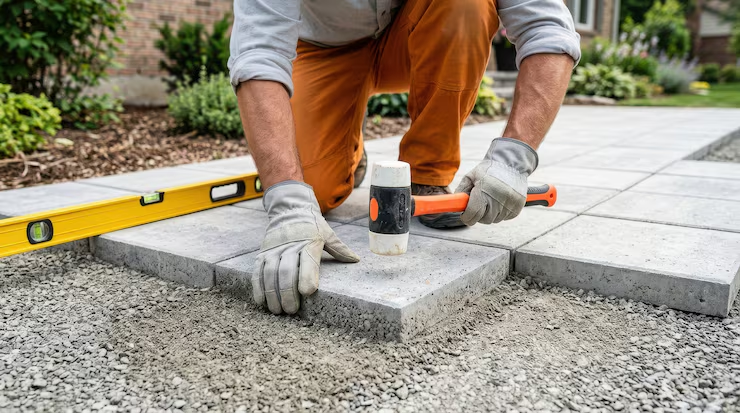
If a walk, patio, or section of drive sat over or near the excavation, it has to come up before digging starts and gets rebuilt afterward. That’s hardscape work layered onto a foundation job, done in the right order so the new surface isn’t undermined by settling backfill underneath it months later. Downspout extensions and any swales are checked at this stage too, since they’re only as good as the grade feeding into them.
The work in sequence
Access and excavation
We locate the affected wall, clear a route to it and dig down to the footing. On a sloped lot the excavation also has to be supported so the ground above does not move. Digging exposes the real condition of the wall, which can differ from what the inside suggested.
Planting and hardscape
Shrubs, beds, steps and walks along the foundation are in the way of the trench. Some can be lifted and replanted. Some will not survive the move, and stone or paved surfaces are taken up and set aside or replaced. We will walk the area with you before any digging so you know what is staying and what is not.
Wall treatment
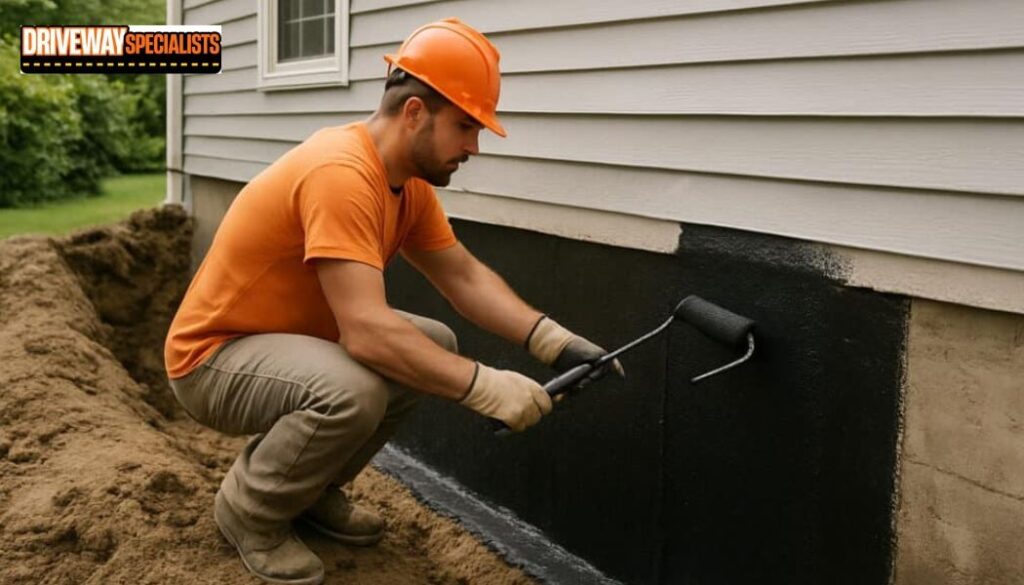
Once exposed, the wall is cleaned and assessed. Loose stone is reset and failed mortar is cut out and repointed. A membrane is applied to the outside face so water meets a barrier instead of an open joint. How much repair a wall needs depends on how much it has deteriorated, and that is rarely known until it is open.
Drainage and backfill
At the base of the wall, a drain carries water away from the footing to somewhere it can safely go. On a hillside lot, where that is can be the hardest question on the job. Backfill goes in with material that lets water pass down to the drain rather than pooling against the wall.
Reinstating the ground
The soil is graded back so that water runs away from the house. This is where the surface above the repair matters most.
Before You Call Anyone
Take photos of the damp line, the crack, or the bowing section now, and note when it’s worse – after heavy rain, during spring thaw, or steadily year-round. That timing tells a contractor a lot about where the water is coming from and how urgent the excavation side of the work really is.
If you’re seeing water through a stone or rubble wall in Carlisle, call Driveway Specialists at (413) 337-3772 and describe what you’re seeing. We’ll talk through what’s involved in getting to that wall on your lot specifically.
Pointers before anyone comes out
Most of this is observation, and it makes any visit more useful.
- Note when it happens. Is it after heavy rain, after snowmelt, or all the time? The pattern points to where the water is coming from.
- Photograph it. Take photos of the wall, the floor and the staining, with something for scale. Date them and repeat after the next rain.
- Mark the spot. Note which wall and which corner. Match it to the outside: which side of the house, and what is above it.
- Walk the outside. Look at where gutters discharge, which way the ground slopes at the foundation, and whether water pools after rain.
- Check the downspouts. Water dumped beside the wall adds to the load. Make sure they are not blocked or emptying near the foundation.
- Look at the stone and mortar. Powdery mortar, bulging or gaps are worth recording. Do not poke at a bowing section.
- Clear what you can. Move stored items away from affected walls so they can be seen and reached.
- Think about access. Where could a machine come in? Is anything shared with a neighbour?
Questions we get asked
Is this the same trade as driveway or paving work?
No. Foundation waterproofing is excavation, drainage, and wall treatment around the house. It's a separate job from paving, though on some properties the two overlap where a drive or walk sits close enough to the foundation that it has to come up during the dig.
Can this be fixed from inside the basement instead?
Interior sealants and drainage channels manage water once it's already inside, but they don't stop it moving through the wall. On a fieldstone or rubble foundation, the water source is in the soil outside, so lasting work happens on the exterior side of the wall.
Why does access matter so much on a Carlisle property?
Many lots here are wooded, on long private drives, with ledge close to the surface and conservation land nearby. Whether a machine can reach the affected wall, and how deep it can dig before hitting rock, shapes the entire approach before any wall work begins.
What happens to my landscaping during the excavation?
Anything in the excavation path along the wall – plantings, edging, a section of walk – has to be moved or removed first. On older properties with established trees close to the house, work is done carefully around root systems rather than through them where possible.
How do I know if this is urgent?
Document when the water or damp shows up – after storms, during spring thaw, or constantly – and how it's changed over time. A wall that's visibly bowing or losing mortar is a more immediate concern than seasonal dampness, but both are worth having looked at before they progress.
Next step
If water is coming through an older stone foundation in Carlisle, we will come and look at the wall and the way in. We have worked on homes like yours for 35+ years, and the family has been doing it since 1988.