
Stone Foundation Waterproofing in Dedham, MA
Water coming through a basement wall after rain. A damp patch that never fully dries. A corner that smells wrong every spring no matter how many dehumidifiers you run. A section of fieldstone that bulges slightly or sheds grit when you brush past it. If any of that sounds familiar, you are not looking at a paving problem or a cosmetic one. You are looking at a foundation that is letting water through the wall itself, and that calls for a different trade than the one most driveway companies practice.
Dedham has a lot of older housing stock, and a lot of it still sits on original fieldstone or rubble foundations, especially in the neighborhoods built up before the mid-20th century. These walls were built without a membrane and without any perimeter drain system around the footing. They were never meant to be watertight on their own. For decades that was fine, because the soil around them handled some of the load and nobody expected a finished basement underneath. Once a basement gets used as living space, storage, or anything that needs to stay dry, the gaps in that original construction stop being tolerable.
Why the water is in the wall, not under it
With poured concrete, water problems usually show up as seepage where the wall meets the slab. Fieldstone and rubble behave differently. The wall itself is porous. Mortar joints shrink, individual stones settle, and water finds a path straight through the masonry rather than around it. That is why interior fixes so often disappoint homeowners here: a sealant or interior drain can manage where the water ends up once it is inside, but it does nothing about the water still moving through several feet of old stone and lime mortar to get there.
That is also why this work has to happen from the outside. Treating the wall from the interior face is treating the symptom. The cause is on the exterior side, where the ground, the wall surface and the drainage path around the footing all meet. Exterior work means excavating down the affected side of the house, exposing the stone, cleaning it back to sound material, repointing where mortar has washed out, and rebuilding the water management at the point where the water enters, not where it shows up indoors.
A proper exterior approach generally includes:
- Excavation along the problem wall down to the footing, done in manageable sections rather than opening the whole foundation at once
- Cleaning and repointing deteriorated mortar joints and resetting any loose stone
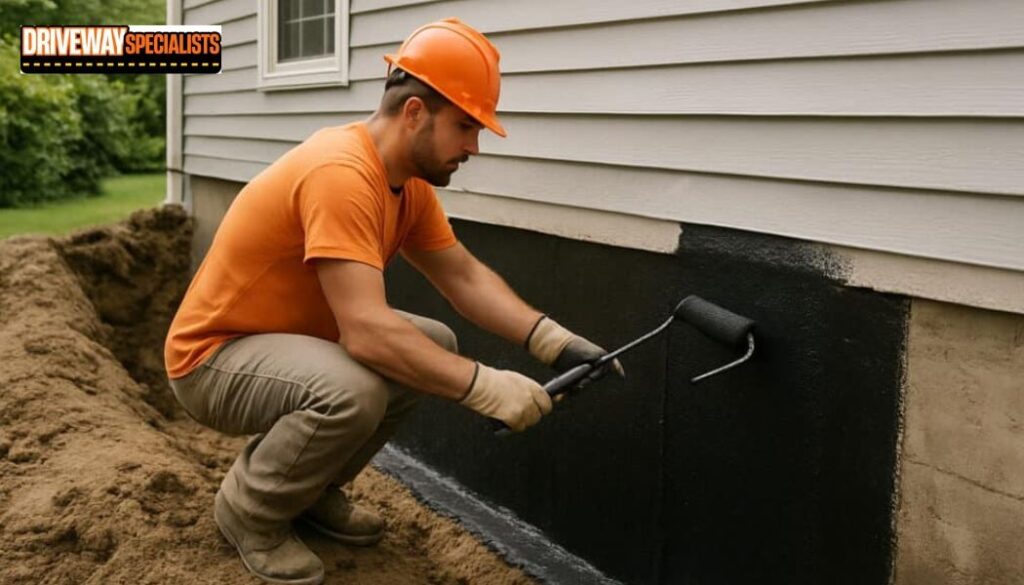
- Applying a waterproof membrane or coating suited to masonry, not a product designed for poured concrete
- Installing or replacing a perimeter drain at the footing, tied into daylight or an existing drainage system
- Backfilling with material that drains well, rather than compacting the original soil straight back against the wall


What Our Clients Say

Access Decides the Approach
Dedham's older neighborhoods often have houses set close together, with a narrow gap between one home and the next. That gap frequently holds the affected wall, which forces decisions a wide-open lot never requires. A full-size excavator may not fit, which means smaller equipment, more hand digging, or working from one end rather than straight down the side. Fences, utility meters, and mature plantings along the property line add their own limits on where machinery can safely sit. Toward the Westwood line, lots open up and a machine can usually get where it needs to go without the same constraints, which can shorten the dig considerably.
What Happens to the Ground Around the House
Excavating along a foundation wall means moving whatever sits in that strip of ground. Mature shrubs, foundation plantings, a walkway, a patch of lawn right against the house, sometimes a section of driveway apron where it runs close to the foundation. On tighter Dedham lots that strip of ground often does double duty as the only side-yard access to a backyard, so it gets disturbed either way.
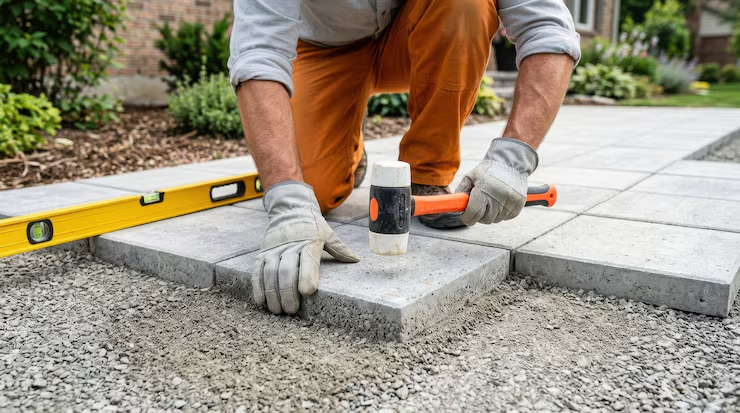
None of it disappears permanently. The planting beds and any hardscape get noted before work starts and reinstated once the wall and drainage are done. On a narrow lot that might mean temporarily relocating a few shrubs and resetting pavers by hand once backfill is complete. On a wider lot there is usually room to stage materials off to one side and keep the disruption smaller.
The Work in Sequence
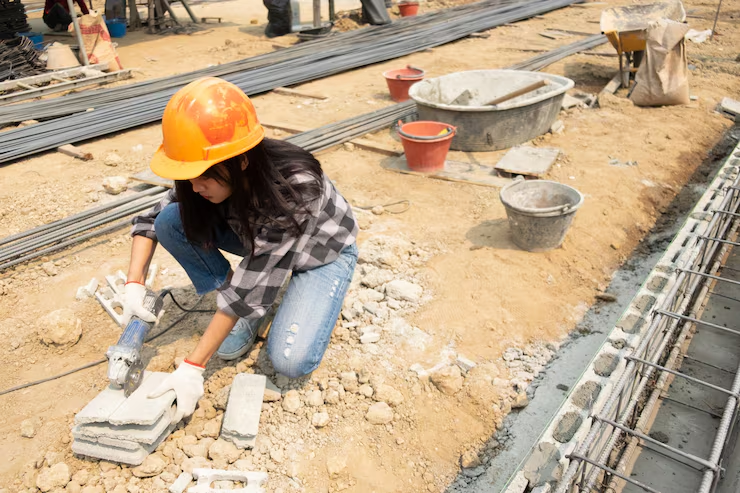
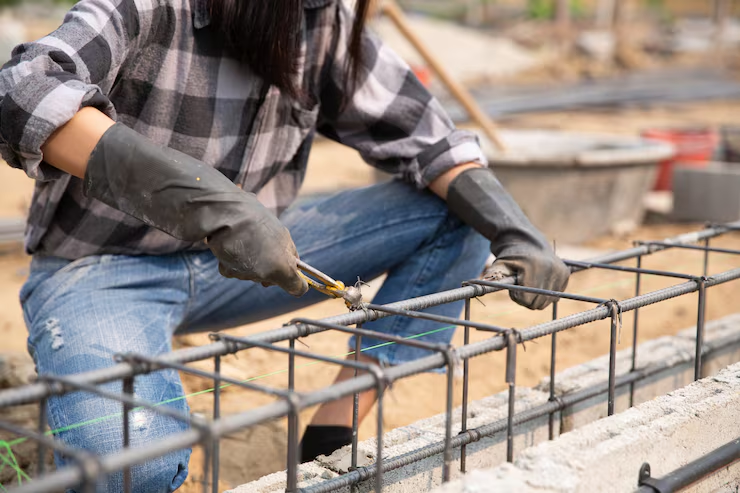
Once a machine or crew can reach the wall, the sequence is fairly consistent. First, excavation down to the footing along the affected section, exposing the full height of the stone. Second, the wall itself gets cleaned back so loose mortar, soil and debris are off the surface, and any damaged sections of the stonework get addressed before anything is applied to the wall. Third, the exterior wall treatment goes on to manage water at the surface it’s actually hitting.
Fourth, drainage. This is the part that actually moves water away rather than just coating the wall, typically a perimeter line at the footing tied into a discharge point away from the house. Fifth, backfill, done in stages rather than dumped in all at once, so the material settles properly against the wall instead of leaving voids that invite the same water problems back in a year or two. Last comes regrading at the surface, which matters more than people expect, since a wall can be perfectly treated and still take on water if the grade beside it slopes back toward the house.
The work in sequence
Access and excavation
We locate the affected wall, clear a route to it and dig down to the footing. On a sloped lot the excavation also has to be supported so the ground above does not move. Digging exposes the real condition of the wall, which can differ from what the inside suggested.
Planting and hardscape
Shrubs, beds, steps and walks along the foundation are in the way of the trench. Some can be lifted and replanted. Some will not survive the move, and stone or paved surfaces are taken up and set aside or replaced. We will walk the area with you before any digging so you know what is staying and what is not.
Wall treatment
Once exposed, the wall is cleaned and assessed. Loose stone is reset and failed mortar is cut out and repointed. A membrane is applied to the outside face so water meets a barrier instead of an open joint. How much repair a wall needs depends on how much it has deteriorated, and that is rarely known until it is open.
Drainage and backfill
At the base of the wall, a drain carries water away from the footing to somewhere it can safely go. On a hillside lot, where that is can be the hardest question on the job. Backfill goes in with material that lets water pass down to the drain rather than pooling against the wall.
Reinstating the ground
The soil is graded back so that water runs away from the house. This is where the surface above the repair matters most.
What to Check Before Anyone Comes Out
Before scheduling a look at the property, note which wall and which corner the water or damp shows up on, whether it tracks with heavy rain or shows up independent of weather, and whether the ground outside that section slopes toward or away from the house. A few photos from a wet day are more useful than a description after things have dried out.
If this matches what you’re seeing in a Dedham basement, call Driveway Specialists at (413) 337-3772 to talk through what you’re noticing and whether an exterior assessment makes sense for your situation.
Pointers before anyone comes out
Most of this is observation, and it makes any visit more useful.
- Note when it happens. Is it after heavy rain, after snowmelt, or all the time? The pattern points to where the water is coming from.
- Photograph it. Take photos of the wall, the floor and the staining, with something for scale. Date them and repeat after the next rain.
- Mark the spot. Note which wall and which corner. Match it to the outside: which side of the house, and what is above it.
- Walk the outside. Look at where gutters discharge, which way the ground slopes at the foundation, and whether water pools after rain.
- Check the downspouts. Water dumped beside the wall adds to the load. Make sure they are not blocked or emptying near the foundation.
- Look at the stone and mortar. Powdery mortar, bulging or gaps are worth recording. Do not poke at a bowing section.
- Clear what you can. Move stored items away from affected walls so they can be seen and reached.
- Think about access. Where could a machine come in? Is anything shared with a neighbour?
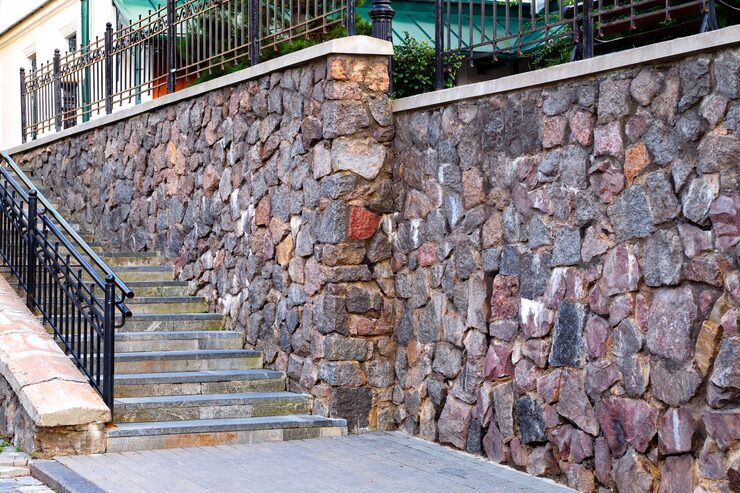
Questions we get asked
Why doesn't an interior sealant fix a fieldstone foundation leak?
An interior sealant coats the inside face of the wall or manages water once it has already come through. With fieldstone and rubble construction, the water is moving through the stone and mortar itself, so the problem keeps pushing against that coating from behind. Addressing the exterior face and the drainage around the footing deals with the water before it reaches the wall at all.
Can this work be done if the house sits close to the neighboring property?
It depends on the gap and what equipment can fit. Many of Dedham's older, closer-set lots require smaller machinery or partial hand excavation rather than a full-size excavator. That changes the timeline but not the sequence of the work itself.
Will my landscaping or walkway be ruined?
Plantings and hardscape directly in the excavation path have to come up or be moved aside, but the goal is to reinstate them once the wall and drainage work is complete. The extent of disruption depends on how close those features sit to the foundation.
How do I know if this is a foundation issue versus a gutter or grading issue?
Surface water problems from gutters or poor grading tend to show up right after rain and often at specific low points. Water coming through the wall itself, damp that lingers regardless of recent weather, or visible deterioration in the stone and mortar point toward the foundation itself needing attention, which is worth having assessed in person.
Next step
If water is coming through an older stone foundation in Dedham, we will come and look at the wall and the way in. We have worked on homes like yours for 35+ years, and the family has been doing it since 1988.