
Stone Foundation Waterproofing in Stow MA
Water coming through a basement wall after a heavy rain, a damp corner that never fully dries out, a section of fieldstone that is crumbling or pushing inward — these are not cosmetic problems. On older Stow properties, many built around orchard land or set well back from the road on what used to be farm lots, the foundation underneath is often original fieldstone or rubble, never designed to keep water out on its own.
Those walls were built from stacked or mortared stone with no membrane behind them and no drainage system around them. Water does not go under a wall like this — it goes through it. Rain and snowmelt saturate the soil against the foundation, find the gaps between stones and the weak mortar joints, and pass straight through to the inside face. In a wet spring, or after the ground has been saturated for days, that process speeds up. The symptom shows up as a damp patch, a trickle, or in worse cases a wall that has started to bow or lose material.
Why this is an outside job
Interior sealants and coatings paint over the inside face of the wall. They might stop a wall from looking wet for a while, but they do nothing about the water pressure building up outside, and in a lot of cases they trap moisture inside the stone itself, which makes the deterioration worse over time. The only way to actually address the cause is to go outside: excavate down to the footing, deal with the wall from the exterior, and give the water somewhere to go other than through your basement.
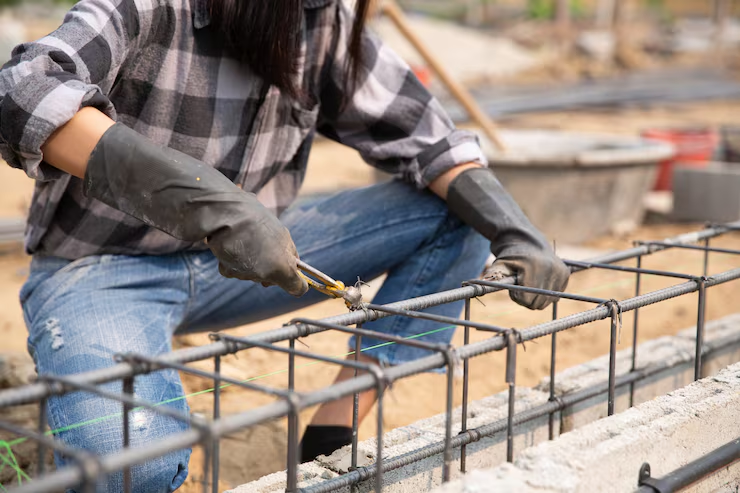
That is a bigger job than a basement coating. It means digging along the foundation, on the affected side, down to the base of the wall, then cleaning the stone back to sound material so a waterproof membrane or coating can actually bond to it. Once that barrier is in place, a drainage layer and a perforated pipe at the footing give groundwater a controlled path away from the wall instead of a path through it, usually tying into existing grading or a discharge point already on the property. It is disruptive, it takes equipment and time, and it is not a job to take on lightly. But it is the only approach that treats the actual cause rather than hiding the symptom for a season or two.


What Our Clients Say

What Happens During Excavation
Once the affected side of the house is reached, the work starts with careful excavation down to the footing. On older Stow properties this often means working around established plantings, stone walls, or hardscape that sits close to the foundation. Anything in the way — shrubs, a section of walkway, an old stone border — usually has to come out before the dig can go ahead, and that gets discussed up front.
The excavation itself exposes the full height of the wall so it can actually be inspected and treated, not just patched where it is visibly wet.
Treating the Wall and Managing Water
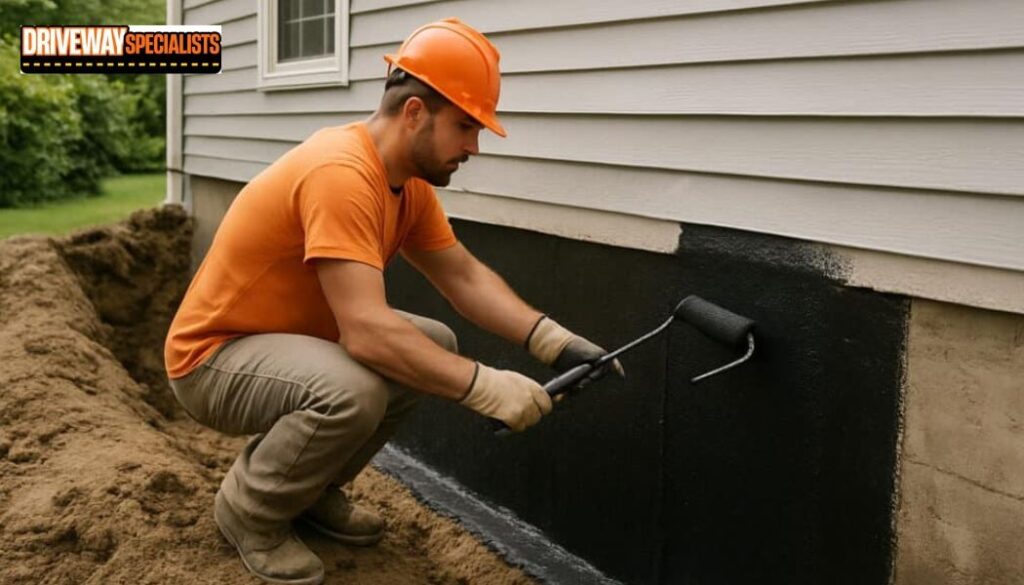
With the wall exposed, the stone and mortar get assessed section by section. Loose or failed mortar joints are repointed, bulging areas are rebuilt where needed, and the exterior face is treated to shed water rather than absorb it. This is also where a perimeter drain usually goes in, set at the footing level, so water moving through the soil is intercepted and carried away before it ever reaches the wall.

Backfill, Regrading, and the Surface Afterward
Once the drainage and wall work is complete, backfill goes in deliberately — not just shoveled back in the order it came out. The right material against the wall is one that drains, rather than the dense, water-holding soil or clay that may have been there before. Grading at the surface gets re-established to carry water away from the foundation instead of toward it, which on a flat or slightly sloped Stow lot can matter as much as the excavation itself.
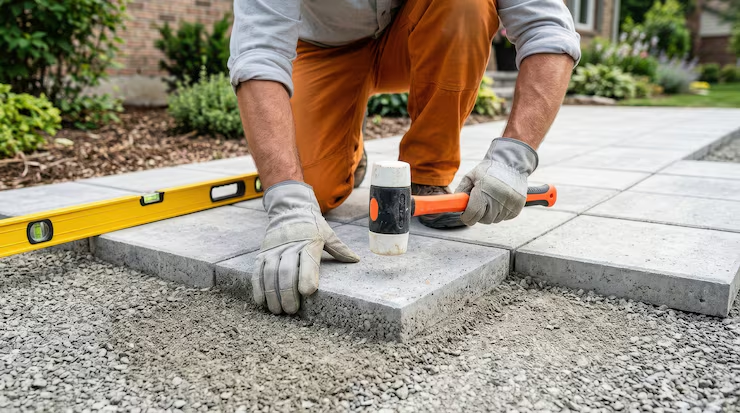
If a section of drive, walkway, or gravel surface sat over the dig area, it has to be reinstated once the ground has settled. That is a separate piece of work from the waterproofing, and it is addressed once the excavation is backfilled and the grading is right, not before.
None of this happens in a single afternoon. Access, the length of wall affected, and what has to come out and go back in around the house all factor into how long the job actually takes.
The work in sequence
Access and excavation
We locate the affected wall, clear a route to it and dig down to the footing. On a sloped lot the excavation also has to be supported so the ground above does not move. Digging exposes the real condition of the wall, which can differ from what the inside suggested.
Planting and hardscape
Shrubs, beds, steps and walks along the foundation are in the way of the trench. Some can be lifted and replanted. Some will not survive the move, and stone or paved surfaces are taken up and set aside or replaced. We will walk the area with you before any digging so you know what is staying and what is not.
Wall treatment
Once exposed, the wall is cleaned and assessed. Loose stone is reset and failed mortar is cut out and repointed. A membrane is applied to the outside face so water meets a barrier instead of an open joint. How much repair a wall needs depends on how much it has deteriorated, and that is rarely known until it is open.
Drainage and backfill
At the base of the wall, a drain carries water away from the footing to somewhere it can safely go. On a hillside lot, where that is can be the hardest question on the job. Backfill goes in with material that lets water pass down to the drain rather than pooling against the wall.
Reinstating the ground
The soil is graded back so that water runs away from the house. This is where the surface above the repair matters most.
What to Check Before You Call
Before anyone comes out, it helps to note where the water appears, whether it tracks with heavy rain or shows up on a delay, and whether the issue is on one wall or more than one. A few photos of the damp area, any visible cracking, and the grading right outside that wall give a much clearer starting picture than a description alone.
If you are seeing water through a stone or rubble foundation wall, call Driveway Specialists at (413) 337-3772 to talk through what you are seeing and what access to the property looks like.
Pointers before anyone comes out
Most of this is observation, and it makes any visit more useful.
- Note when it happens. Is it after heavy rain, after snowmelt, or all the time? The pattern points to where the water is coming from.
- Photograph it. Take photos of the wall, the floor and the staining, with something for scale. Date them and repeat after the next rain.
- Mark the spot. Note which wall and which corner. Match it to the outside: which side of the house, and what is above it.
- Walk the outside. Look at where gutters discharge, which way the ground slopes at the foundation, and whether water pools after rain.
- Check the downspouts. Water dumped beside the wall adds to the load. Make sure they are not blocked or emptying near the foundation.
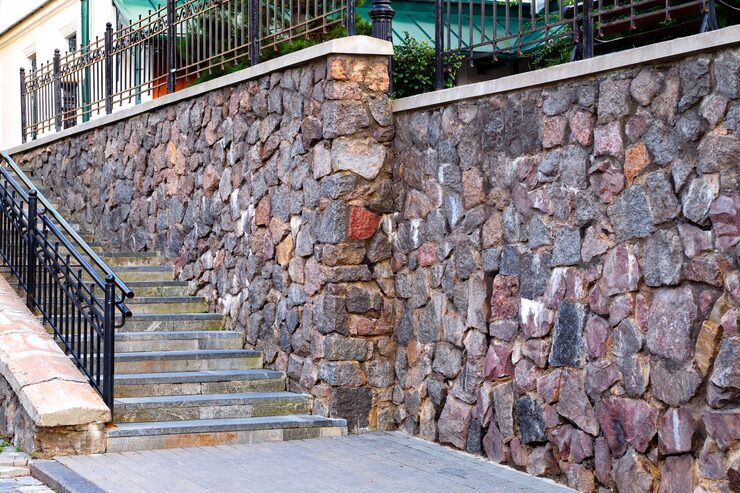
- Look at the stone and mortar. Powdery mortar, bulging or gaps are worth recording. Do not poke at a bowing section.
- Clear what you can. Move stored items away from affected walls so they can be seen and reached.
- Think about access. Where could a machine come in? Is anything shared with a neighbour?
Questions we get asked
Why does water come through a fieldstone wall instead of under it?
Fieldstone and rubble foundations were built without a membrane or perimeter drain. The joints between stones and the mortar itself let water pass straight through the wall when the soil outside is saturated, rather than water finding a path underneath.
Can this be fixed from inside the basement?
An interior coating or sealant can reduce how a wall looks from the inside, but it does not relieve the water pressure building up outside the foundation, and it can trap moisture inside the stone. Treating the cause means working from the exterior.
Does my driveway or walkway need to come out for this work?
Only if it sits directly over the area that needs to be excavated. On many Stow properties the affected wall is reachable without disturbing the drive, but where a path or gravel surface is in the way, it has to be addressed as part of the job.
What matters most for access on a property like mine in Stow?
Long drives set back from the road, mature trees, and existing stone walls or plantings close to the foundation all affect whether excavation equipment can reach the problem wall directly, which shapes how the job is planned before work starts.
Next step
If water is coming through an older stone foundation in Stow, we will come and look at the wall and the way in. We have worked on homes like yours for 35+ years, and the family has been doing it since 1988.