
Stone Foundation Waterproofing in Walpole, MA
Water coming through a basement wall after a heavy rain, a damp corner that never fully dries, white mineral staining creeping up the stone, or a section of foundation that looks like it is bowing inward — these are not cosmetic problems. They are signs that the ground outside the wall is doing something the wall was never built to handle.
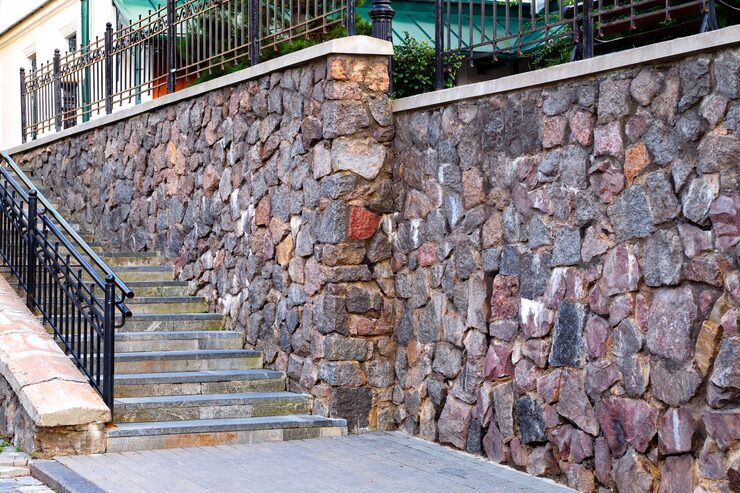
Older houses in Walpole, especially the ones on the rural roads in the outer sections of town, were often built on fieldstone or rubble foundations. These walls were never meant to be waterproof. They were built dry-stacked or lightly mortared, with no membrane on the outside and no drain at the base to carry water away. The wall itself is porous. Water does not come in under the foundation the way it might with a crack in a poured concrete slab — it moves through the stone and the mortar joints between the stones, following gravity and hydrostatic pressure from the soil outside.
Walpole’s mix of clay-heavy soil in some neighborhoods and ledge closer to the surface in others makes this worse than it might be elsewhere. Clay soil holds water against the foundation wall far longer after a storm than sandy soil would, keeping the stone saturated for days instead of hours. Where ledge sits close to the surface, water has nowhere to go but sideways, straight toward the nearest foundation wall it can reach. Grading that slopes toward the house, gutters that dump straight at the base of the wall, and window wells without any drainage all add to the volume of water the stone is forced to absorb.
Why the inside isn’t where the fix happens
Sealing the inside face of the wall, or applying an interior coating, stops water from showing up where you can see it. It does not stop water from reaching the wall in the first place. The moisture keeps moving through the stone, and over time that constant saturation is what drives frost heave against the wall in winter, mortar breakdown, and the slow bowing or crumbling you see in failing sections. Treating the inside treats the symptom. The water is still there, still working against the stone, just hidden behind a coating until it finds a new path through.
The actual fix happens outside. That means excavating along the foundation down to the footing, addressing the wall itself, and putting in a way for water to drain away from the house instead of soaking into it. A proper exterior approach for a stone foundation typically involves:
- Excavating in manageable sections to expose the wall down to the footing without destabilizing it
- Parging or repointing deteriorated mortar joints before any waterproofing goes on
- Applying a rubberized or liquid-applied membrane suited to an irregular stone surface
- Installing a footing drain tied into daylight or a sump system to carry water away permanently


What Our Clients Say

What the Work Involves
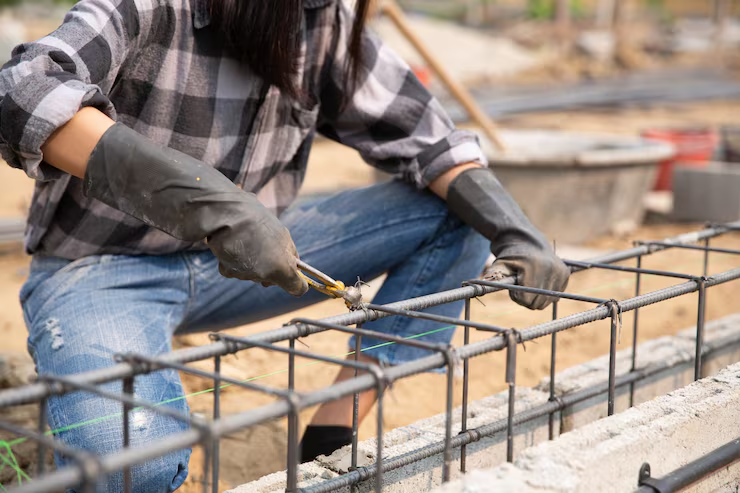
The sequence is straightforward even though each step takes time. Excavation opens a trench along the outside of the affected wall, down to the footing, which on older Walpole stone foundations often sits deeper than expected. Whatever is planted or paved against that section has to come out of the way first — shrubs, a walkway, sometimes a section of patio.
Why Access Decides the Approach
Walpole’s housing stock splits fairly evenly between suburban subdivision lots and older rural properties with more room around the house. That difference matters more here than almost anywhere else in the project, because stone foundations often sit low to grade and need clear working space to excavate safely without undermining the wall itself.

Regrading, Backfill, and What Happens at the Surface
Backfill is not just filling the trench back in. The soil nearest the wall usually gets a layer that drains rather than holds water, and the final grade needs to slope away from the foundation rather than toward it. A flat or inward-sloping grade next to the house is often part of why water was reaching the wall in the first place, even before the stone and mortar condition is considered.
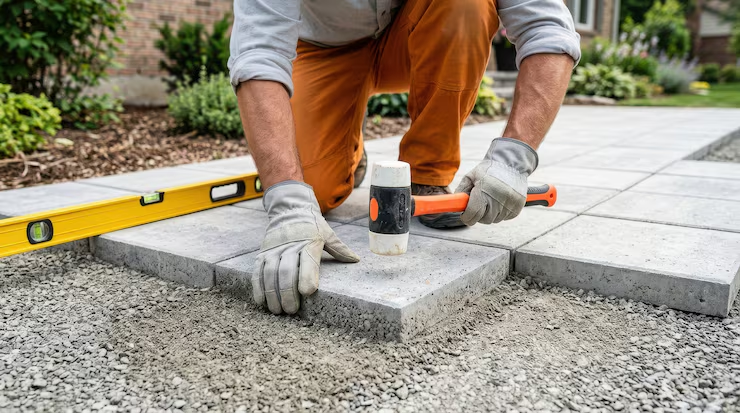
If a walkway, patio, or section of driveway sits directly against the affected wall, it usually has to be lifted and reset once the excavation and drainage work is done. That is not optional cosmetic work — hardscape poured tight against a foundation wall with no gap often blocks the very drainage path the repair is trying to create. On the mostly straight, level drives common in Walpole, reinstating that section is usually a contained job rather than a full redo, but it does need to happen in the right order: foundation work first, surface last.
We’ll walk the specific layout with you before anything is quoted, since no two foundations fail the same way.
The work in sequence
Access and excavation
We locate the affected wall, clear a route to it and dig down to the footing. On a sloped lot the excavation also has to be supported so the ground above does not move. Digging exposes the real condition of the wall, which can differ from what the inside suggested.
Planting and hardscape
Shrubs, beds, steps and walks along the foundation are in the way of the trench. Some can be lifted and replanted. Some will not survive the move, and stone or paved surfaces are taken up and set aside or replaced. We will walk the area with you before any digging so you know what is staying and what is not.
Wall treatment
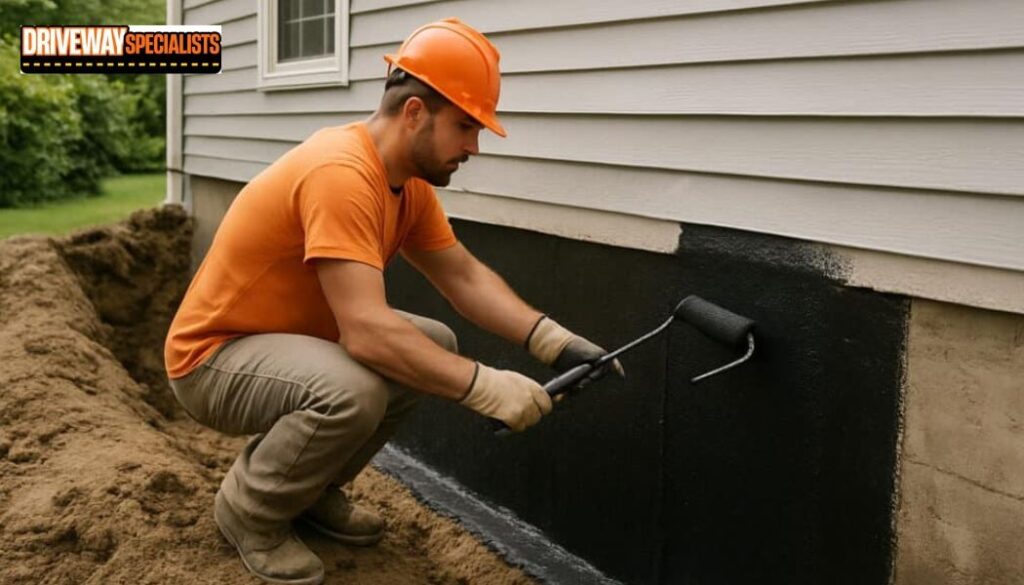
Once exposed, the wall is cleaned and assessed. Loose stone is reset and failed mortar is cut out and repointed. A membrane is applied to the outside face so water meets a barrier instead of an open joint. How much repair a wall needs depends on how much it has deteriorated, and that is rarely known until it is open.
Drainage and backfill
At the base of the wall, a drain carries water away from the footing to somewhere it can safely go. On a hillside lot, where that is can be the hardest question on the job. Backfill goes in with material that lets water pass down to the drain rather than pooling against the wall.
Reinstating the ground
The soil is graded back so that water runs away from the house. This is where the surface above the repair matters most.
What to Check Before You Call
A little documentation helps before anyone comes out, especially with the older stone foundations common around Walpole. Note which wall and which corner the water or damage shows up on, whether it tracks with specific rain events, snowmelt, or shows up even in dry weather, and take a few photos of the stone itself — staining, bowing, loose mortar, white mineral deposits, or gaps between stones. If you know roughly how old the house is or whether grading or gutters have changed recently, jot that down too.
Pointers before anyone comes out
Most of this is observation, and it makes any visit more useful.
- Note when it happens. Is it after heavy rain, after snowmelt, or all the time? The pattern points to where the water is coming from.
- Photograph it. Take photos of the wall, the floor and the staining, with something for scale. Date them and repeat after the next rain.
- Mark the spot. Note which wall and which corner. Match it to the outside: which side of the house, and what is above it.
- Walk the outside. Look at where gutters discharge, which way the ground slopes at the foundation, and whether water pools after rain.
- Check the downspouts. Water dumped beside the wall adds to the load. Make sure they are not blocked or emptying near the foundation.
- Look at the stone and mortar. Powdery mortar, bulging or gaps are worth recording. Do not poke at a bowing section.
- Clear what you can. Move stored items away from affected walls so they can be seen and reached.
- Think about access. Where could a machine come in? Is anything shared with a neighbour?
Questions we get asked
Can you seal the inside instead?
Will my basement be dry afterwards?
Do you have to dig the whole house?
What happens to my garden and walkways?
Can you work on a steep or tight lot?
What if my neighbour shares the drive?
Next step
If water is coming through an older stone foundation in Walpole, we will come and look at the wall and the way in. We have worked on homes like yours for 35+ years, and the family has been doing it since 1988.