
Stone Foundation Waterproofing in Watertown, MA
Water coming through a basement wall after rain, a damp patch that never fully dries, a corner of the foundation that stays wet every spring no matter the season before it — these are not plumbing problems and they are not something a sump pump actually fixes. They are foundation problems, and in a lot of the two-family and triple-decker housing stock around Watertown, they start with how the house was built in the first place.
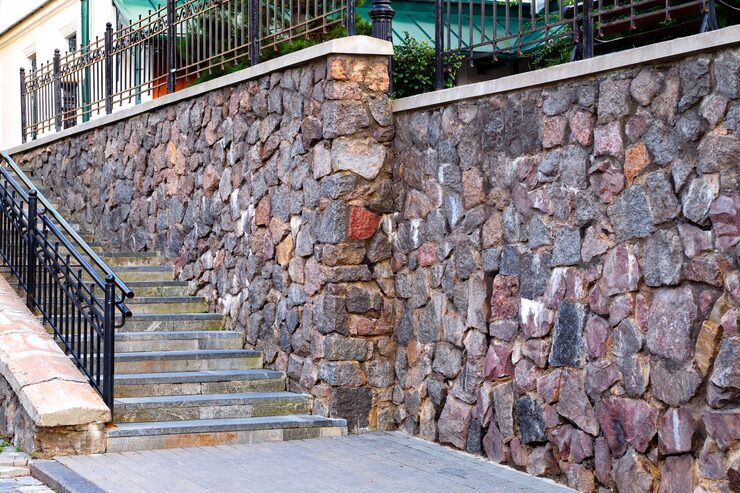
Many of these homes sit on fieldstone or rubble stone foundations laid without a membrane and without a perimeter drain of any kind. The stones themselves aren’t the problem. The mortar joints and the soil pressing against them are. Water in the surrounding ground finds the path of least resistance, and in a wall built from irregular stone with lime or weak cement mortar, that path runs straight through the wall itself, not under the footing. You’ll see it as a damp line, a mineral stain, a soft patch of mortar, or in worse cases a section that bows slightly inward where years of saturated soil have pushed against it.
Why this is an exterior job, not an interior one
Interior sealants and coatings paint over the inside face of the wall. They can make the wall look dry for a while, but they don’t stop water from moving through the stone and mortar — they just trap it, which can make the mortar break down faster. The only way to actually address the cause is from the outside: excavate down to the footing, deal with the wall itself, and give the water somewhere to go that isn’t through your basement.
That’s a bigger, more disruptive job than an interior fix, and it’s honest to say so upfront. It means digging along the foundation, which means whatever is planted or paved against that wall has to come up first. On the kind of lot common in Watertown — narrow side yards, shared driveways between two-family houses, minimal setback from the property line — that excavation has real constraints before any waterproofing work even starts.


What Our Clients Say

What Access Actually Decides
On a lot with a wide, open yard, a mini-excavator can get alongside the foundation with room to stage spoil and swing a bucket. That’s rarely the layout here. Watertown’s small-lot housing, shared driveways, and tight side yards often mean the affected wall sits a few feet from a fence, a neighbor’s foundation, or a driveway apron that opens onto a busy street. Sometimes a machine can reach one side of the house and not the other, which changes the plan before any digging starts.
The Work, In Sequence
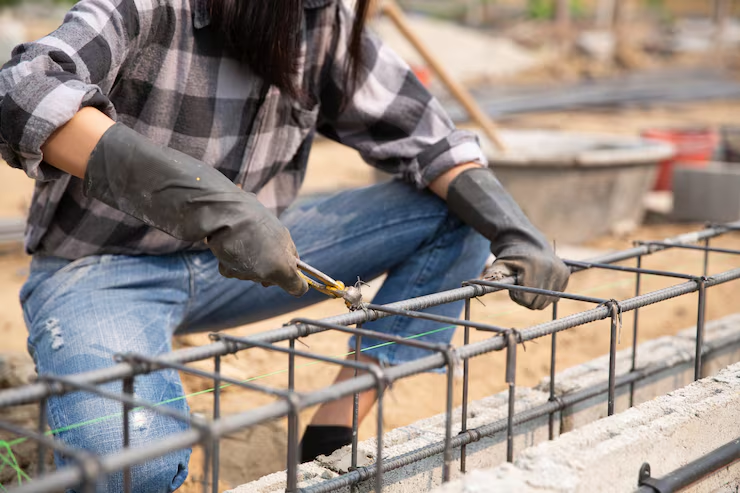
Once the approach side is confirmed, excavation goes down to the footing in that section of wall. Shrubs, small trees, and old plantings against the stone usually have to come out — root systems close to old rubble walls are part of why Watertown foundations fail in the first place. Paving, steps, or a walkway along that side get removed to give the machine or hand tools room to work.
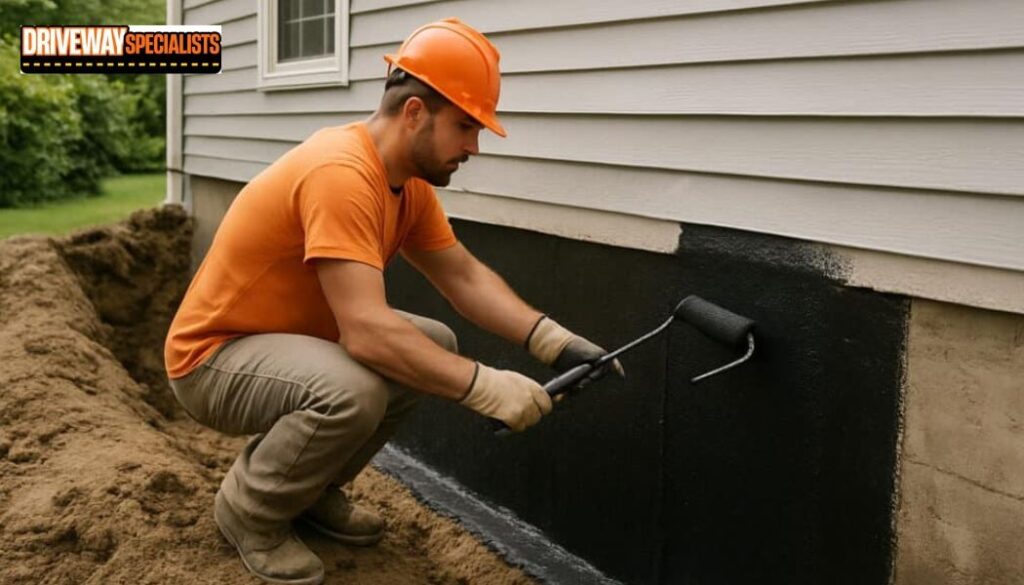
With the wall exposed, stone and mortar are cleaned and repaired where degraded, then treated and sealed on the exterior face. A drainage layer goes in against the wall, tied to a perimeter drain at the footing that carries water away instead of letting it pool against the stone. Backfill goes in stages, not all at once, so the drainage layer stays intact and the soil doesn’t recreate the original problem.

Regrading and the Surface Afterward
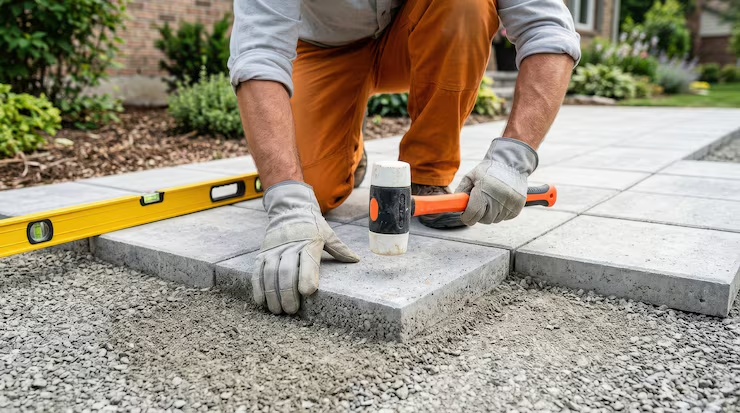
The last stage is reinstating the ground: regrading so water sheds away from the foundation instead of pooling back against it, which matters as much as the drain itself. Watertown’s older lots often slope toward the house rather than away from it after decades of settling, so this is where that gets corrected, not just patched. If a section of driveway or walkway had to come up for access, it gets rebuilt once the excavation and backfill are settled — there’s no point repaving over ground that’s still compacting and will sink unevenly within a season. On a shared driveway between two units, common on Watertown’s tighter lots, this step needs coordinating with whoever uses the other side, since the surface usually has to come back as one continuous job rather than a patch that telegraphs the property line.
The work in sequence
Access and excavation
We locate the affected wall, clear a route to it and dig down to the footing. On a sloped lot the excavation also has to be supported so the ground above does not move. Digging exposes the real condition of the wall, which can differ from what the inside suggested.
Planting and hardscape
Shrubs, beds, steps and walks along the foundation are in the way of the trench. Some can be lifted and replanted. Some will not survive the move, and stone or paved surfaces are taken up and set aside or replaced. We will walk the area with you before any digging so you know what is staying and what is not.
Wall treatment
Once exposed, the wall is cleaned and assessed. Loose stone is reset and failed mortar is cut out and repointed. A membrane is applied to the outside face so water meets a barrier instead of an open joint. How much repair a wall needs depends on how much it has deteriorated, and that is rarely known until it is open.
Drainage and backfill
At the base of the wall, a drain carries water away from the footing to somewhere it can safely go. On a hillside lot, where that is can be the hardest question on the job. Backfill goes in with material that lets water pass down to the drain rather than pooling against the wall.
Reinstating the ground
The soil is graded back so that water runs away from the house. This is where the surface above the repair matters most.
What to Check Before Anyone Comes Out
Note where the water actually enters — a specific wall, a corner, a spot that only shows up during heavy rain — and roughly how long it’s been happening. A few photos of the damp line, efflorescence, or any bowing, taken over a couple of weeks if possible, are more useful than a description after the fact. Watertown’s older stone and rubble foundations often sit close to grade, so note any downspouts, window wells, or sloped soil directing water toward the wall in question. Knowing whether the basement is finished or open also helps shape the conversation.
Pointers before anyone comes out
Most of this is observation, and it makes any visit more useful.
- Note when it happens. Is it after heavy rain, after snowmelt, or all the time? The pattern points to where the water is coming from.
- Photograph it. Take photos of the wall, the floor and the staining, with something for scale. Date them and repeat after the next rain.
- Mark the spot. Note which wall and which corner. Match it to the outside: which side of the house, and what is above it.
- Walk the outside. Look at where gutters discharge, which way the ground slopes at the foundation, and whether water pools after rain.
- Check the downspouts. Water dumped beside the wall adds to the load. Make sure they are not blocked or emptying near the foundation.
- Look at the stone and mortar. Powdery mortar, bulging or gaps are worth recording. Do not poke at a bowing section.
- Clear what you can. Move stored items away from affected walls so they can be seen and reached.
- Think about access. Where could a machine come in? Is anything shared with a neighbour?
Questions we get asked
Will interior sealant stop the water?
It can slow visible seepage for a while, but it doesn't address water moving through the stone and mortar. In many cases it traps moisture in the wall instead, which speeds up mortar breakdown rather than solving it.
Does the whole foundation need to be excavated?
Not usually. Work typically focuses on the specific wall or section where water is entering, based on where the damage and drainage issue actually are.
What happens to my driveway or walkway if it's next to the wall?
If paving sits along the section being excavated, it has to come up to allow access and goes back once backfill and regrading are complete. On shared driveways, this often needs coordinating with a neighbor.
How do I know if my foundation is fieldstone or rubble?
Older Watertown two-families and triple-deckers often have visibly irregular stone foundations rather than poured concrete. If you're unsure, a look at the exposed basement wall usually makes it clear.
Next step
If water is coming through an older stone foundation in Watertown, we will come and look at the wall and the way in. We have worked on homes like yours for 35+ years, and the family has been doing it since 1988.