
Stone Foundation Waterproofing in MetroWest Massachusetts


What Our Clients Say
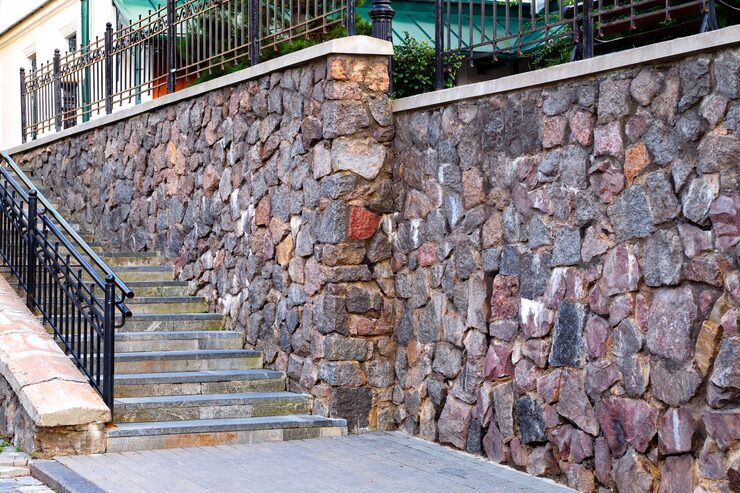
What stone foundation waterproofing is
A fieldstone or rubble foundation was never built to be watertight. It is stone laid with mortar, often lime-based, and in older work sometimes with very little mortar at all. Water that reaches the wall finds the joints and moves through. Interior sealers and coatings tend to trap moisture in the stone behind them, and the surface lets go in time.
The work we do starts outside. We excavate down the face of the wall so the stone and joints can be seen, repair what has failed, and then give the water somewhere to go: drainage at the footing, and ground that slopes away from the house rather than toward it. The aim is to stop water building up against the wall in the first place.
Who it suits
This is for owners of older houses with fieldstone, rubble or mixed stone-and-brick foundations. It suits you if you see water coming through the wall itself, damp patches or white mineral deposits on the stone, mortar washing out of joints, or a cellar that stays wet well after the rain has stopped. It is also for people who have already tried an interior fix and still have the problem.
It does not suit every wet cellar. If the water is coming up through the floor from a high water table, or from a broken pipe, the wall is not the cause and we will say so. A site visit is how we find out.
Why the freeze matters here
New England frost does a great deal of the damage. Water that sits in a joint freezes, expands and opens it a little more each winter. In spring the next thaw drives more water in. A wall that was merely damp becomes one that leaks, which is why a small problem is worth dealing with early.
What changes the job from one property to the next
- The ground. Sandy, glacial soil drains and lets water drop away from the wall. Clay holds water against the foundation and keeps the pressure on. Ledge close to the surface changes how deep and how easily we can dig. The soil decides what drainage the wall needs.
- The grade. If the land slopes toward the house, water is delivered to the wall every time it rains. Sometimes the answer is regrading as much as it is repair.
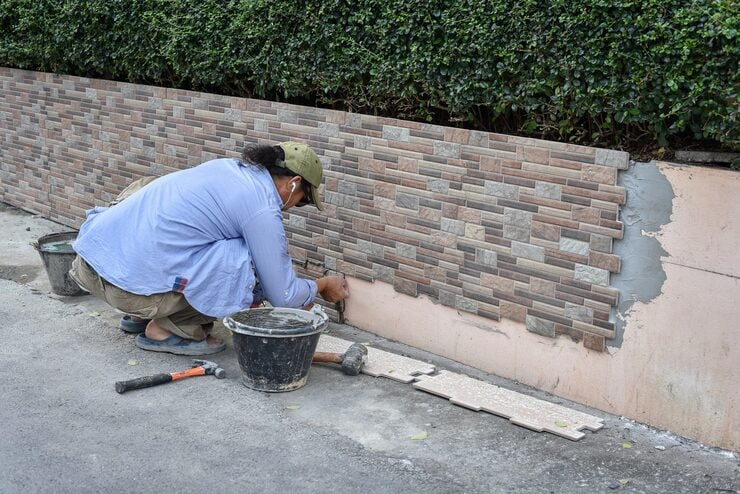
- The condition of the stone. Some walls need little more than their joints repaired. Others have lost enough mortar that sections need real work. We cannot know until the wall is exposed, but a good look from outside and inside tells us a lot.
- Access. Excavation needs a machine and room to work. A tight lot in Newton or Watertown, with the house close to the line and little room beside it, is a different job from a house on a Weston lot where equipment can reach every side. Plantings, patios, porches and utilities along the wall all have to be worked around.
- Length of wall. A single leaking corner and a whole perimeter are different jobs, and often different jobs for different reasons.
Find your town
- Near our Natick base: start with Natick and the towns immediately around it.
- Denser streets close to Boston: Newton and Watertown, where access is the main planning question.
- Larger lots and longer drives: Weston, where room to work is rarely the problem and water management over a larger site is.
- Beyond those: pick your county, Norfolk, Middlesex or eastern Worcester, and find your town from there.
In Westborough, see stone foundation waterproofing in Westborough.

Questions we get asked
Can't I just seal the inside of the wall?
Why is it worse in spring and after a thaw?
Do you have to dig out the whole foundation?
How do I tell if the water is coming through the wall or the floor?
Will a dehumidifier or sump pump solve it?
What happens to my patio, plantings or porch along the wall?
Can you give me a price over the phone?
The next step
Tell us what you are seeing and where the house is, and we will arrange a visit to look at the wall, the ground and the grade before giving you a price. Call Driveway Specialists, Inc. on (413) 337-3772.