
Stone Foundation Waterproofing: Protect Your Basement from Water Damage
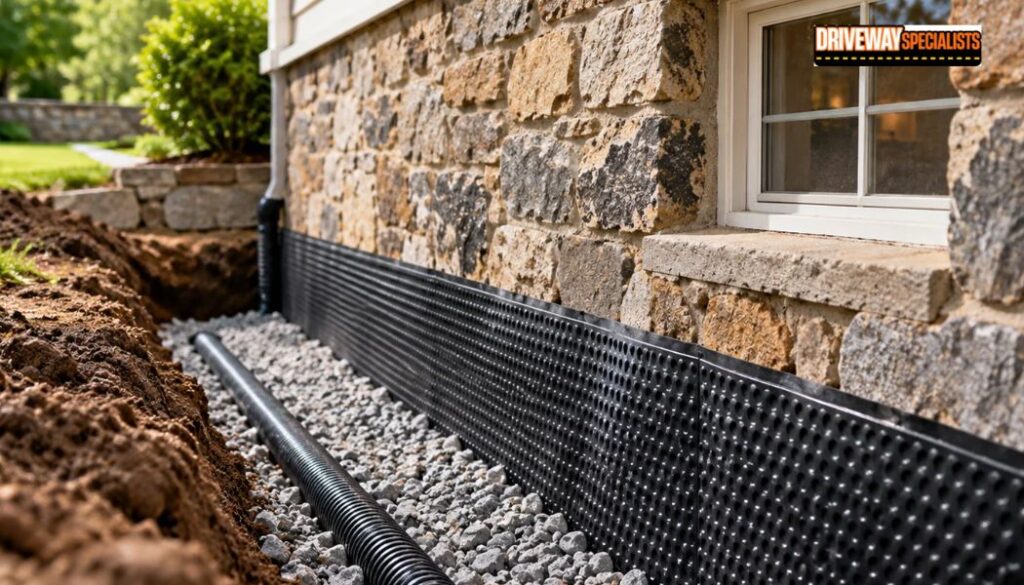
Stone foundation waterproofing is the process of stopping water from entering a fieldstone, granite, or rubble foundation by repairing the mortar, redirecting groundwater, and adding drainage. Stone foundations are porous by design, so they need a different approach than poured concrete. Done correctly, waterproofing keeps your basement dry, protects your home’s structure, and preserves its value.
If you own an older home in Massachusetts, this guide explains why stone basements leak, which solutions work, and how to choose the right contractor.
Why Stone Foundations Leak
Most stone foundations were built more than a century ago with fieldstone, granite blocks, and lime-based mortar. They were never meant to be fully watertight. At Driveway Specialists, we understand how age, weather, and moisture can affect these historic foundations. Over time, several issues can make leaks worse:
- Deteriorated mortar: Freeze-thaw cycles crack and crumble joints, creating direct paths for water.
- Poor exterior drainage: Water pools against the foundation when the soil slopes toward the house.
- Clogged or short gutters: Roof runoff dumps beside the foundation wall instead of away from it.
- High water table: Spring melt and heavy rain raise groundwater and push water through the stone.
- Hydrostatic pressure: Saturated soil presses against the wall and forces moisture through joints and gaps.
Warning Signs Your Stone Basement Needs Waterproofing
Look for these early signs before small leaks become costly repairs:
- Damp walls, puddles, or standing water after rain
- White, chalky deposits (efflorescence) on the stone
- A musty smell or visible mold
- Crumbling or missing mortar between stones
- Peeling paint, rusted utilities, or warped wood near the walls
- Rising humidity that makes the basement feel unusable
Catching these signs early usually means a simpler, less expensive fix.
Proven Stone Foundation Waterproofing Methods
No single solution fits every home. A good contractor inspects the wall, the soil, and the drainage before recommending a plan. These are the most effective options.
1. Repointing and Masonry Repair
Repointing replaces damaged mortar with a compatible mix. Stone foundations often need a mortar that is softer than the stone, so a mismatched mix can crack the wall. This step closes the gaps where most water enters.
2. Exterior Waterproofing and Drainage
Excavating around the foundation allows crews to repair the wall, apply a waterproof coating or membrane, and install drainage. This stops water before it reaches the stone and is the most thorough long-term fix, though it costs more and disturbs landscaping.
3. Interior Drainage Systems
An interior perimeter drain with a sump pump collects water that seeps in and carries it out of the basement. This is often the most practical option for stone foundations, especially when outside access is limited by patios, driveways, or tight lot lines.
4. Grading, Gutters, and Downspouts
Sloping soil away from the house and extending downspouts at least several feet from the wall reduces water load. These low-cost fixes support every other method.
5. Parging and Breathable Coatings
A properly applied parge coat smooths and protects the wall surface. Breathable products are important on stone, because sealing moisture inside can cause spalling and further deterioration.
Why Choosing the Right Method Matters
Applying a standard concrete waterproofing product to a stone wall is one of the most common mistakes. Stone needs to release moisture vapor, and the wrong sealant traps it, which leads to cracked mortar and worse leaks. A contractor experienced with stone and masonry will match materials to your foundation’s age and construction.
Stone Foundation Waterproofing in Harvard, Maynard, and Wayland, MA
Homes in central Massachusetts face heavy snowmelt, freeze-thaw swings, and older stone construction. These conditions make local experience valuable.
Stone foundation waterproofing in Harvard, MA: Many Harvard homes sit on historic farmhouse-era fieldstone foundations. Rural lots and sloped terrain often create runoff problems that call for exterior grading, drainage, and mortar repair.
Stone foundation waterproofing in Maynard, MA: Maynard’s older mill-town homes frequently have rubble and granite foundations on tighter lots. Interior drainage and repointing are common solutions where exterior excavation is difficult.
Stone foundation waterproofing in Wayland, MA: Wayland properties near wetlands and higher groundwater areas often need a combined approach, such as drainage, sump systems, and masonry repair, to manage seasonal water pressure.
Driveway Specialists provides foundation and drainage solutions across these communities and surrounding towns. Request a free estimate to get a plan tailored to your property.
How Much Does Stone Foundation Waterproofing Cost?
Cost depends on the size of the foundation, the method used, wall condition, and site access. Repointing and drainage improvements cost less than full exterior excavation. Because every stone foundation is different, a written, on-site estimate is the only reliable way to get accurate pricing. Be cautious of quotes given without inspecting your basement.
How to Choose a Stone Foundation Waterproofing Contractor
Ask these questions before you hire:
- Do you have specific experience with stone and fieldstone foundations?
- Will you diagnose the cause of the leak before recommending a solution?
- What materials do you use, and are they breathable and compatible with stone?
- Do you provide a written estimate and warranty?
- Can you show examples of past local projects?
Conclusion
Stone foundations add character and durability to older homes, but they need the right waterproofing strategy to stay dry. By repairing mortar, controlling water around the house, and installing proper drainage, you can protect your basement, prevent mold, and safeguard your home’s structure for years to come.
If you notice damp walls, crumbling mortar, or water after storms, do not wait for the problem to grow. Contact Driveway Specialists to schedule your free estimate for stone foundation waterproofing in Harvard, Maynard, Wayland, and nearby areas.
Frequently Asked Questions
Can you waterproof a stone foundation?
Yes. Stone foundations can be effectively waterproofed using repointing, drainage systems, exterior membranes, and improved grading. The right combination depends on how and where water enters.
What is the best way to waterproof a stone foundation basement?
Most homes benefit from a combined approach: repair the mortar, manage surface water with grading and gutters, and add an interior or exterior drainage system. An inspection will confirm the best fit.
Is it normal for a stone foundation to leak?
Minor dampness is common in older stone basements, but active leaks, pooling water, or mold are signs that action is needed. Ignoring them can lead to structural damage.
Can I use waterproof paint on a stone foundation?
Usually not. Paint and sealers that trap moisture can cause stone and mortar to deteriorate. Breathable, stone-compatible treatments are the safer choice.
How long does stone foundation waterproofing last?
With quality materials and proper installation, results can last for many years. Regular gutter cleaning and drainage maintenance help extend the life of the work.
Do you offer stone foundation waterproofing in Harvard, Maynard, and Wayland, MA?
Yes. Driveway Specialists serves homeowners in Harvard, Maynard, and Wayland, as well as nearby Massachusetts communities.